


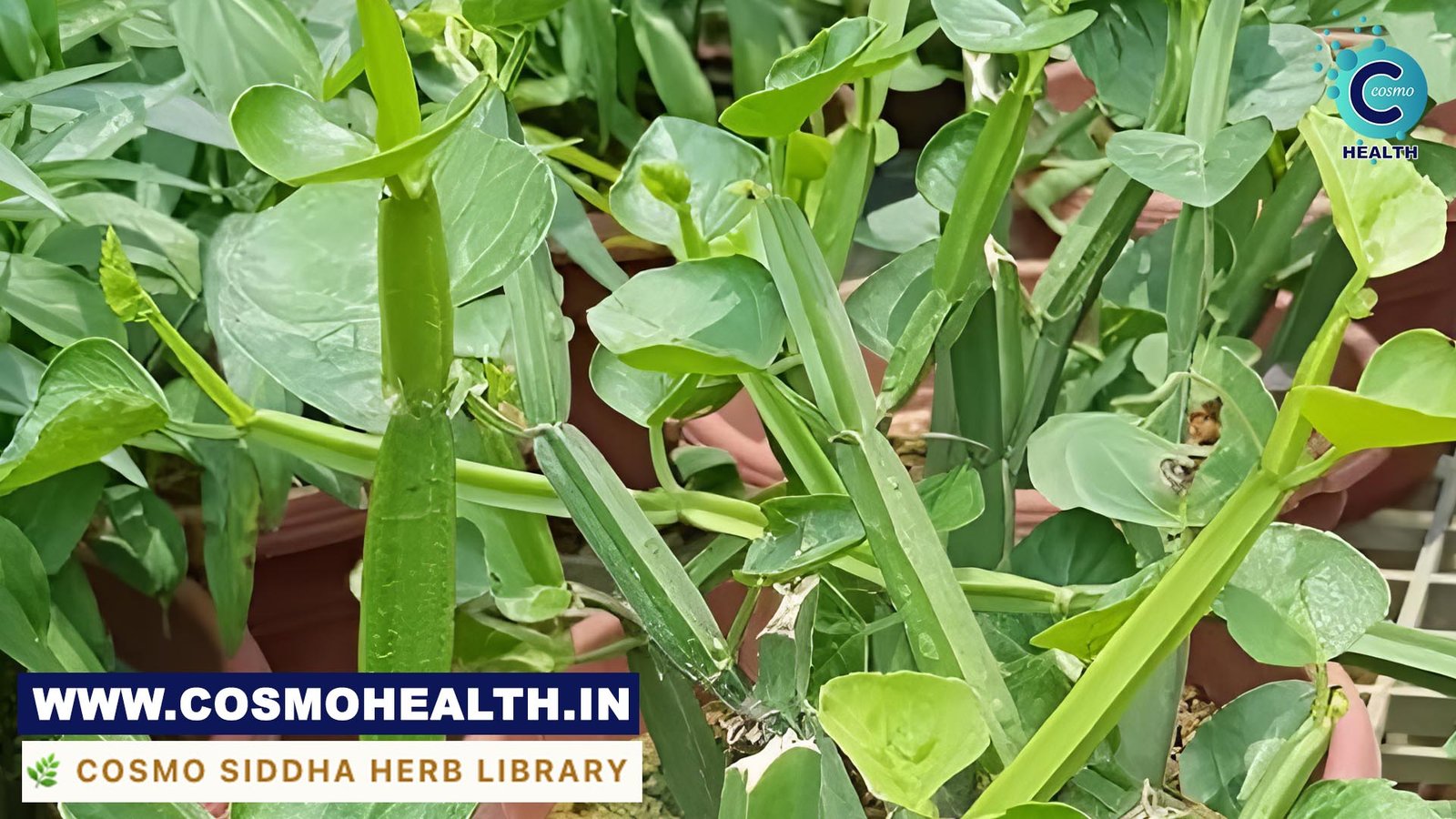
Veldt Grape, or Pirandai, is a potent Siddha herb, a climbing vine known for strengthening bones and improving digestion.
🌿 COSMO SIDDHA HERB LIBRARY
Pirandai (பிரண்டை)
The ancient creeper renowned for its bone-healing and digestive powers.
Veldt Grape, known as Pirandai in Siddha, is a perennial plant celebrated for its numerous medicinal properties. It is particularly revered for its ability to promote bone health and enhance digestive function. This succulent climber holds a significant place in traditional medicine systems.
🌱 What is Veldt Grape (Pirandai)?
Ensure you correctly identify Cissus quadrangularis before use.
🌿 Pirandai (பிரண்டை)
Veldt Grape, Devil's Backbone, Adamant Creeper (Cissus quadrangularis L.)
How to Identify Veldt Grape (Pirandai)
👁️ Appearance
Leaves: Simple, lobed or unlobed, often heart-shaped to kidney-shaped, fleshy, dark green, emerging from nodes.
Stem: Distinctive four-angled (quadrangular), succulent, jointed stems with constricted nodes, often winged along the edges, light green to reddish-green.
Fruit/Flower: Small, globose to obovoid berries, turning red when ripe, typically 1-2 seeds.
🌱 Where Veldt Grape Grows
This robust climber thrives in various tropical and subtropical environments.
- India (especially South India)
- Sri Lanka
- Southeast Asia
- Africa
⚠️ Do Not Confuse With
While visually distinct due to its quadrangular stem, some might confuse it with other members of the Vitaceae family or common succulents. Its unique jointed, four-angled stem is its primary identifier.
Veldt Grape (Pirandai) in Siddha Medicine
Traditional Reference Traditional Reference 🟤
Primarily used for strengthening bones, promoting fracture healing, alleviating digestive issues like indigestion and hemorrhoids, managing menstrual disorders, and reducing inflammation. It balances Vata and Kapha doshas.
📖 References in Siddha Texts
Meaning: Pirandai strengthens bones, regularizes digestion, cures hemorrhoids, and removes menstrual irregularities.
Associated Siddhar
Agathiyar
Siddhar Agathiyar is considered the father of Siddha Medicine, whose teachings form the foundation of understanding herbs like Pirandai and their therapeutic applications. His wisdom underpins the traditional uses of this powerful plant.
Traditional & Modern Uses of Veldt Grape
🌿 Traditional Uses
Traditional Use 🟤- Fracture Healing & Bone Strengthening: Known as 'Asthisamharaka' (bone-setter) in Ayurveda, it is widely used in Siddha for its osteoprotective properties, aiding in bone repair and increasing bone mineral density.
- Digestive Aid: Helps in improving digestion, alleviating indigestion, gastritis, and constipation. It is also effective in treating hemorrhoids.
- Joint Pain & Inflammation: Applied externally and consumed internally to reduce pain and inflammation associated with arthritis, sprains, and swellings.
- Menstrual Disorders: Used to regulate menstrual cycles and relieve discomfort associated with irregular periods.
- Wound Healing: Applied topically as a poultice to promote faster healing of wounds, cuts, and insect bites.
🧬 Modern Research
Research Evidence 🔵Contemporary scientific studies are validating many traditional claims regarding Veldt Grape's medicinal properties.
- Osteogenic Activity: Studies have shown Cissus quadrangularis extracts promote osteoblast proliferation and differentiation, accelerate fracture healing, and have anti-osteoporotic effects.
- Anti-inflammatory & Analgesic: Research supports its anti-inflammatory and pain-relieving properties, attributed to its triterpenoid and phytosteroid content, useful in conditions like arthritis.
- Gastric Protection: Evidence suggests gastroprotective effects, reducing gastric acid secretion and protecting the stomach lining from ulcers.
- Antioxidant Activity: Contains various phytochemicals with significant antioxidant capacity, combating oxidative stress.
⚠️ Safety & Warnings
Natural remedies are potent and should be used with caution and under expert guidance.
Who should be careful
- Pregnant and breastfeeding women should avoid use without medical supervision.
- Individuals with known allergies to plants in the Vitaceae family.
- Those on blood-thinning medications, as it may have mild anticoagulant effects.
- Diabetics, as it may influence blood sugar levels (monitor closely).
Possible Side Effects
When consumed raw or improperly processed, it can cause itching and irritation in the mouth and throat due to calcium oxalate crystals. Processed forms are generally well-tolerated. Mild gastric upset has been reported in rare cases.
🌿 Quick Summary
📚 Sources
- Siddha Vaidya Thirattu
- Indian Pharmacopoeia
- Journal of Ethnopharmacology
- Ayurvedic Pharmacopoeia of India
- Review articles on Cissus quadrangularis