


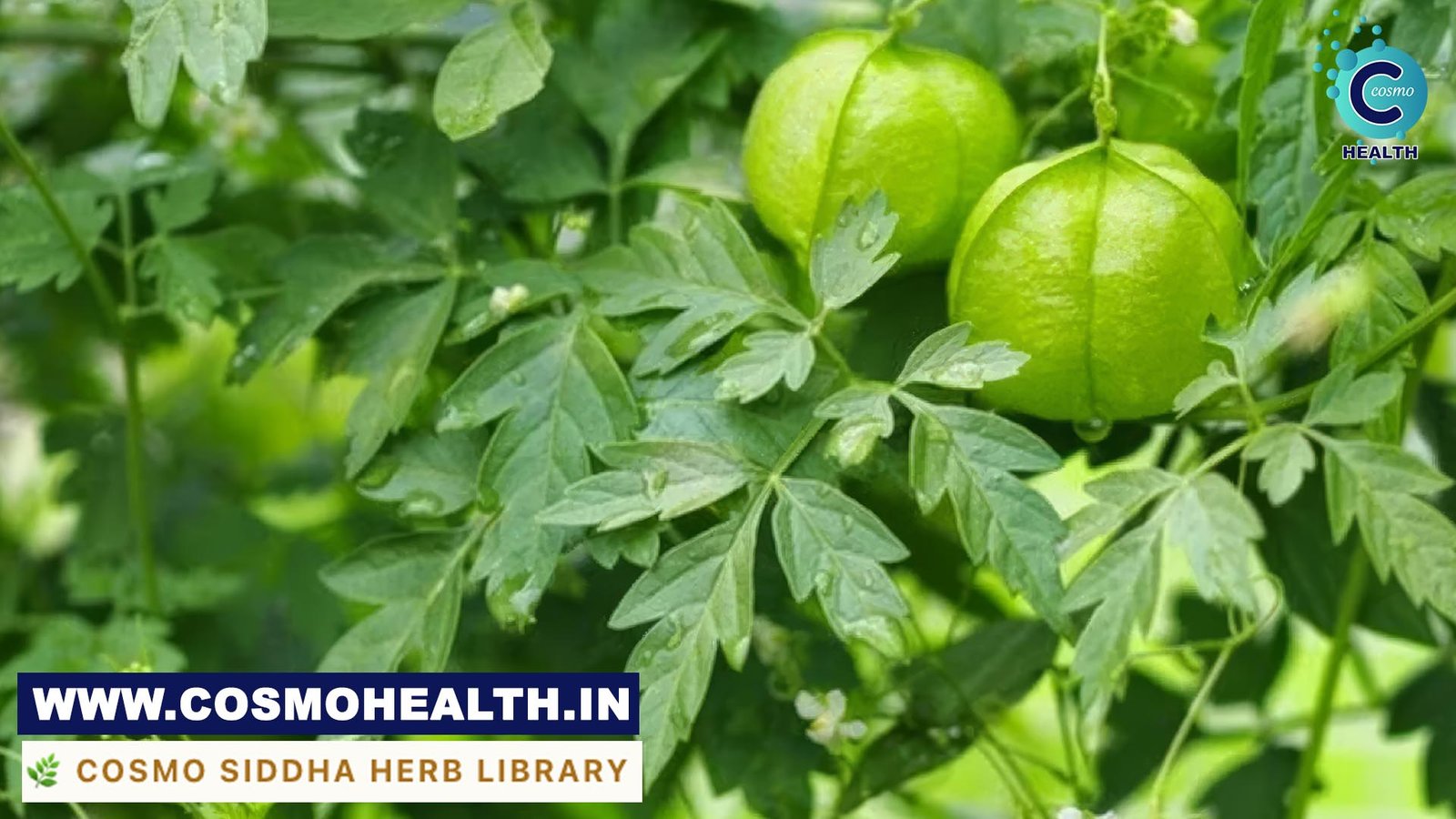
Balloon Vine (Cardiospermum halicacabum), a potent herb in Siddha, targets inflammation and pain, particularly in joints.
🌿 COSMO SIDDHA HERB LIBRARY
Balloon Vine
The heart-seed vine, a traditional remedy for joint pain and inflammation.
Balloon Vine, known as Mudakathan in Tamil, is a climbing plant revered in Siddha medicine. It is primarily used for its anti-inflammatory and analgesic properties, especially beneficial for musculoskeletal disorders like joint pain and swelling.
🌱 What is Balloon Vine (Mudakathan)?
Verify the identity of this herb by checking its distinctive balloon-like fruits and heart-shaped seeds.
🌿 Balloon Vine
Balloon Vine (Cardiospermum halicacabum)
How to identify Balloon Vine
👁️ Appearance
Leaves: Leaves are alternately arranged, bi-ternate (twice three-parted) with serrated margins. They are light green and delicate.
Stem: Slender, much-branched, grooved, and somewhat hairy stem, typically climbing or sprawling.
Fruit/Flower: The most distinctive feature: inflated, papery, balloon-like capsules, 3-4 cm long, turning brown when mature. Each fruit contains three small, round, black seeds with a white, heart-shaped hilum (hence 'heart seed').
🌱 Where it grows naturally
Balloon Vine is a ubiquitous plant, thriving in various tropical and subtropical regions around the globe.
- India
- Sri Lanka
- Africa
- Americas
- Southeast Asia
⚠️ Do not confuse with
While its general vine-like appearance might be mistaken for other climbers, the unique inflated, balloon-like fruits make Cardiospermum halicacabum quite distinct and easily identifiable.
Balloon Vine in Siddha Medicine
Traditional Reference Traditional Reference 🟤
Known as 'Mudakathan' or 'Mudakkatran' in Tamil, meaning 'that which dispels stiffness'. It is highly valued for treating 'Vatha' disorders, particularly those affecting joints and muscles.
📖 References in Siddha Texts
Meaning: It cures rheumatic pain, expels intestinal gas, alleviates bone tuberculosis (a traditional term for joint issues), reduces excess pitta, and cools the body.
Associated Siddhar
Agathiyar
Many Siddha formulations and principles attributed to Agathiyar often include herbs like Mudakathan for their profound therapeutic effects on various ailments.
Uses and Effects of Balloon Vine
🌿 Traditional Uses in Siddha
Traditional Use 🟤- Arthritis and Joint Pain: Fresh leaf paste or decoction is used internally and externally to relieve pain, swelling, and stiffness associated with arthritis, rheumatism, and gout.
- Inflammation: Its potent anti-inflammatory properties help reduce inflammation throughout the body, making it useful for various inflammatory conditions.
- Digestive Issues: Used to alleviate flatulence, indigestion, and constipation due to its carminative properties.
- Skin Ailments: Topical application of leaf paste or oil is used for skin conditions like itching, rashes, and eczema.
- Hair Care: Known to promote hair growth and prevent dandruff when applied as a hair oil or paste.
🧬 Modern Research & Evidence
Research Evidence 🔵Contemporary scientific studies have begun to validate the traditional uses of Cardiospermum halicacabum, confirming many of its reported pharmacological activities.
- Anti-inflammatory and Analgesic Activity: Studies confirm its efficacy in reducing inflammation and pain, attributed to compounds like flavonoids and triterpenes, supporting its use in arthritis.
- Antioxidant Properties: Research indicates the presence of antioxidants that help combat oxidative stress and cellular damage.
- Antimicrobial Effects: Extracts have shown inhibitory effects against certain bacteria and fungi, validating its use in traditional skin preparations.
- Antidiarrheal Activity: Some studies suggest its potential in managing diarrhea, aligning with its use for digestive complaints.
⚠️ Safety & Warnings
Remember, natural does not automatically mean safe. Always exercise caution and seek professional advice.
Who should be careful?
- Pregnant and breastfeeding women should avoid use unless advised by a healthcare professional.
- Individuals with known allergies to plants in the Sapindaceae family.
- Those on blood-thinning medications, as some herbs may interact.
Potential Side Effects
Generally considered safe when used appropriately. However, excessive consumption might lead to mild gastrointestinal discomfort in sensitive individuals. Topical applications are usually well-tolerated, but a patch test is recommended.
🌿 Quick Summary
📚 Sources
- Siddha Vaithiya Thirattu
- Journal of Ethnopharmacology
- Indian Journal of Traditional Knowledge
- Pharmacopoeia of India (Ayurvedic & Siddha sections)