


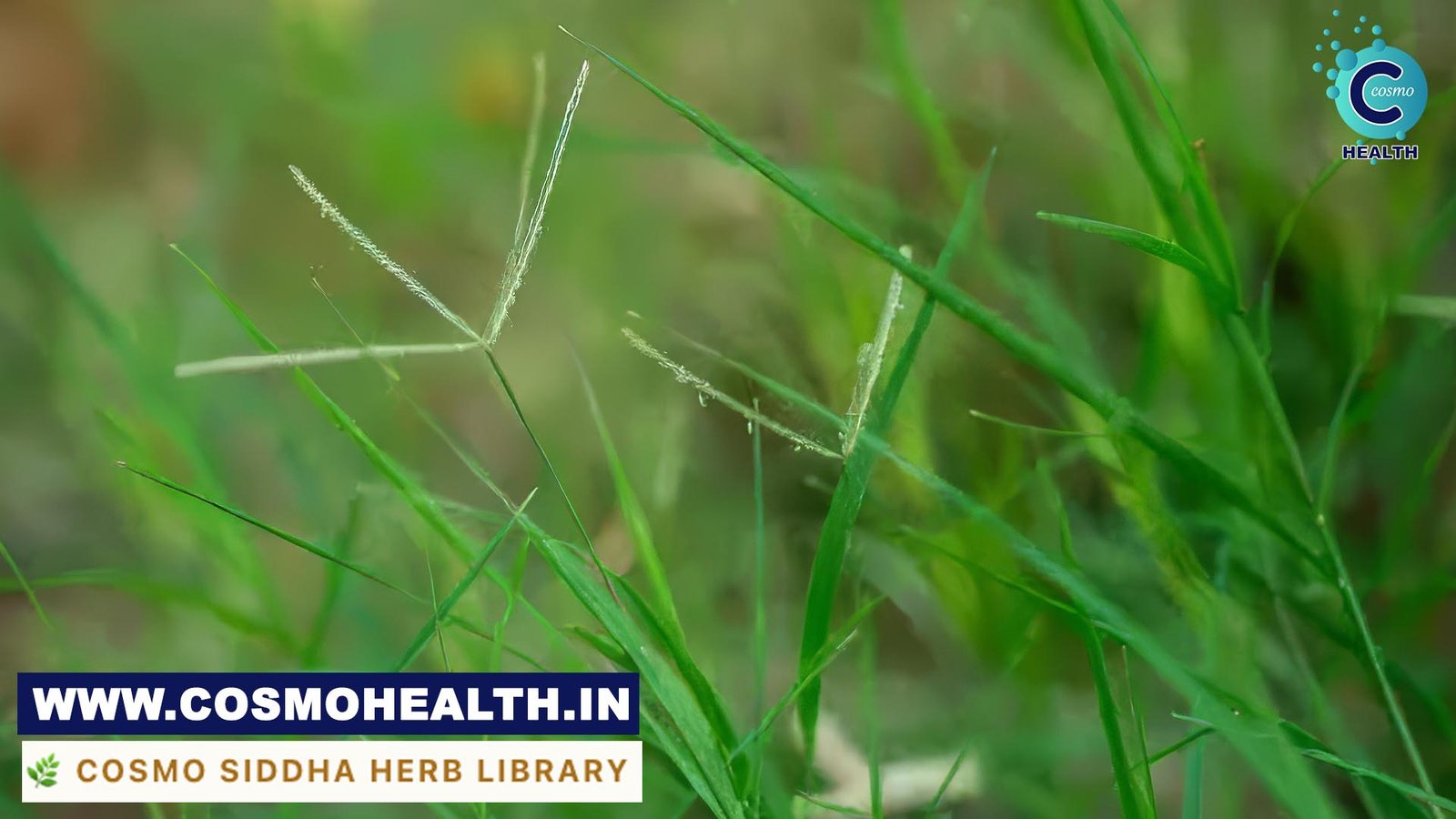
Bermuda Grass (Arukam Pul), a powerhouse in Siddha, purifies blood, cools the body, and heals wounds naturally.
🌿 COSMO SIDDHA HERB LIBRARY
Arukam Pul (Tamil)
The versatile grass, a cornerstone of Siddha healing.
Bermuda Grass, known as Arukam Pul in Siddha, is a ubiquitous weed celebrated for its profound medicinal properties. Revered for its cooling, detoxifying, and healing actions, it's a staple in traditional remedies.
🌱 What is Bermuda Grass (Arukam Pul)?
Verify you are looking for Cynodon dactylon, a common lawn grass with potent medicinal uses.
🌿 Arukam Pul (Tamil)
Bermuda Grass (Cynodon dactylon)
How to identify Bermuda Grass
👁️ Appearance
Leaves: Slender, grey-green, 2-15 cm long, with a distinct ligule and auricles. Arranged alternately along the stem.
Stem: Creeping stolons (above ground) and rhizomes (underground) forming dense mats. Stems are flat, wiry, and often purplish at the nodes.
Fruit/Flower: Small, yellowish-brown seeds contained within spikelets on digitate inflorescences.
🌱 Where Bermuda Grass grows
Bermuda Grass is highly adaptable and thrives in various environments across warm regions globally.
- India (especially South India)
- Africa
- Australia
- North and South America
- Southeast Asia
⚠️ Do not confuse with
Often confused with other common lawn grasses. Bermuda grass has distinct stolons and rhizomes, sharp-pointed leaves, and characteristic purplish nodes, distinguishing it from annual bluegrass or fescues.
Bermuda Grass in Siddha Medicine
Traditional Reference Traditional Reference 🟤
Highly esteemed in Siddha for its 'Veeryam' (potency) as Seetha Veeryam (cooling). It balances Pitta and Kapha doshas, purifies blood, reduces inflammation, and aids in various urinary and skin conditions.
📖 References in Siddha Texts
Meaning: Bermuda Grass is a divine medicine, it purifies the blood, reduces body heat, and removes skin diseases.
Associated Siddhar
Agathiyar
Agathiyar, a primordial Siddhar, is credited with systematizing much of Siddha medicine, including the properties and uses of common herbs like Arukam Pul, passed down through oral and written traditions.
Uses and Effects
🌿 Traditional Uses
Traditional Use 🟤- Blood Purification: Used as a potent blood purifier, aiding in detoxification and promoting overall health.
- Cooling Agent: Known for its 'Seetha Veeryam' (cooling potency), it's used to alleviate excess body heat and Pitta-related conditions.
- Urinary Tract Health: Beneficial for urinary disorders, helping to soothe irritation, reduce burning sensation, and act as a mild diuretic.
- Skin Disorders: Applied externally or taken internally to treat various skin conditions like rashes, itching, and minor wounds due to its anti-inflammatory properties.
- Wound Healing: Used topically as a paste to accelerate healing of cuts, abrasions, and insect bites.
- Digestive Aid: Helps in calming stomach irritation and is sometimes used for conditions like dysentery.
🧬 Modern Research
Research Evidence 🔵Contemporary studies are exploring the pharmacological basis for the traditional uses of Cynodon dactylon.
- Anti-inflammatory and Analgesic: Studies have indicated the presence of compounds with significant anti-inflammatory and analgesic properties, supporting its use for pain and inflammation.
- Antioxidant Activity: Research shows high antioxidant activity, attributed to its phenolic compounds and flavonoids, which combat oxidative stress.
- Antimicrobial Properties: Extracts have demonstrated antibacterial and antiviral activities against several pathogens, validating its traditional use in infections and wound care.
- Diuretic Effect: Pharmacological studies confirm its mild diuretic action, supporting its role in urinary tract health.
⚠️ Safety & Warnings
Remember, even natural remedies can have side effects or contraindications. Purity and preparation methods are crucial.
Who should be careful
- Pregnant and breastfeeding women should use with caution and under expert guidance.
- Individuals with known allergies to grasses should avoid internal use.
- Patients on blood thinners or diabetes medication should consult a doctor due to potential interactions.
- Avoid use in large quantities without professional supervision.
Side Effects
Generally considered safe when used appropriately. Excessive intake might lead to mild digestive upset or allergic reactions in sensitive individuals. Rare cases of mild skin irritation upon topical application have been reported.
🌿 Quick Summary
📚 Sources
- Siddha Vaidhya Thirattu
- Dr. K. S. Murugesan - Materia Medica of Siddha Medicine
- Pharmacognosy and Phytochemistry of Siddha Herbs
- Research journals on Cynodon dactylon