


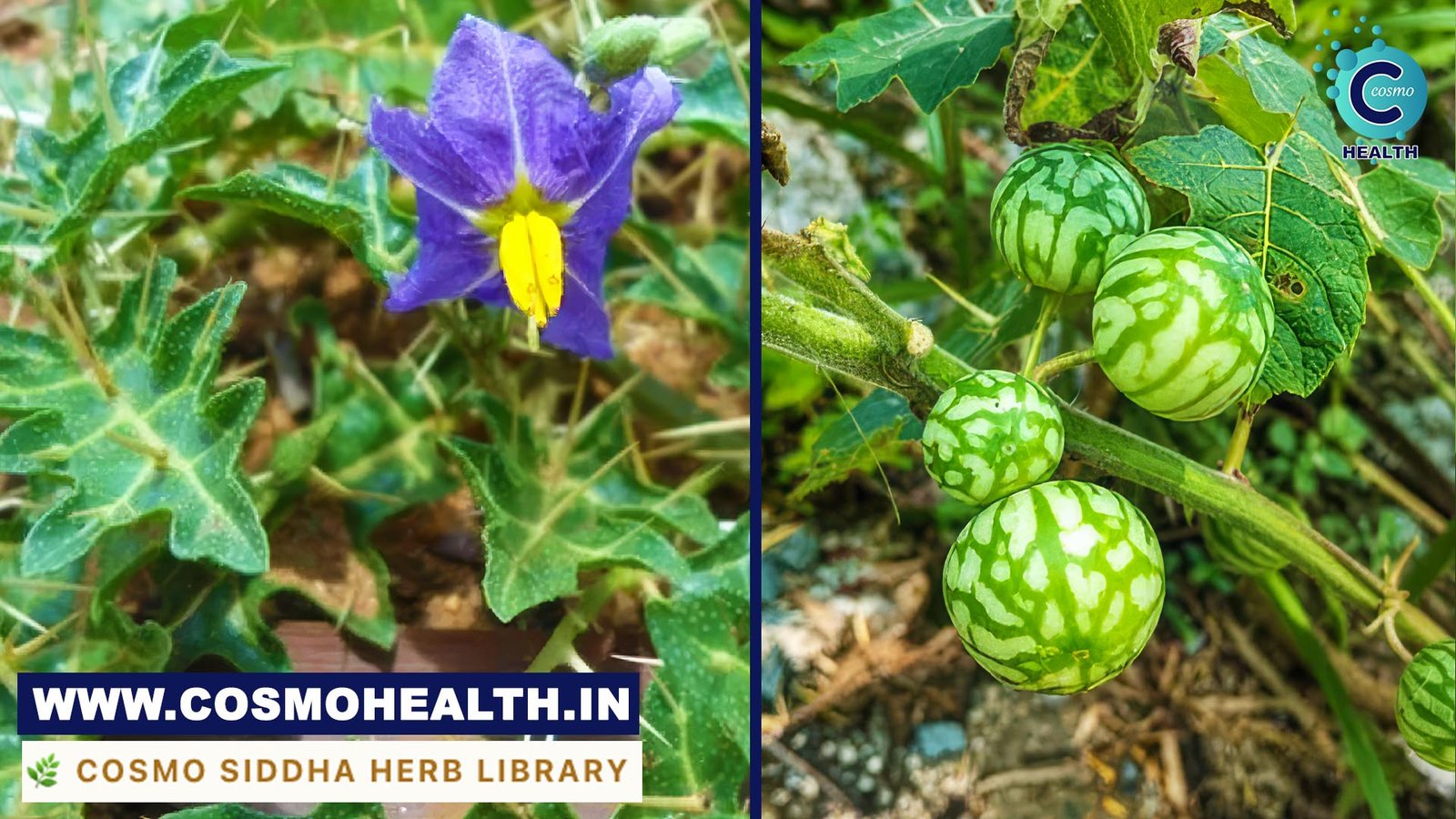
A thorny Siddha herb renowned for treating respiratory ailments, coughs, and fevers. Potent anti-inflammatory properties.
🌿 COSMO SIDDHA HERB LIBRARY
Kandankathiri
The prickly powerhouse for respiratory wellness.
Kandankathiri is a spiny perennial herb widely used in Siddha and Ayurvedic medicine. It's particularly valued for its efficacy in treating various respiratory conditions, including asthma and chronic cough, due to its expectorant and anti-inflammatory properties.
🌱 What is Kandankathiri?
Kandankathiri (Solanum virginianum) is a crucial herb in traditional medicine, identified by its thorny stems, violet flowers, and yellow berries.
🌿 Kandankathiri
Yellow-berried Nightshade, Thorny Nightshade, Kantakari (Solanum virginianum L. (syn. Solanum xanthocarpum Schrad. & H. Wendl.))
How to Identify Kandankathiri
👁️ Distinctive Appearance
Leaves: Leaves are ovate-oblong to elliptic, deeply lobed or sinuately dentate, covered with stellate hairs, and bear sharp yellow prickles along the veins on both surfaces.
Stem: Stems are profusely branched, woody at the base, and covered densely with sharp, yellow, straight prickles, typically 1-2 cm long.
Fruit/Flower: Fruits are globose berries, 1-2 cm in diameter, green with white stripes when young, turning yellow or golden-yellow when ripe.
🌱 Where it grows
Kandankathiri is a resilient plant found predominantly in warm regions, thriving in disturbed and open habitats.
- India (especially Southern India)
- Southeast Asia
- Africa
- Australia
- Other tropical and subtropical regions
⚠️ Do not confuse with
Can be confused with other Solanum species like Solanum torvum (Sundakkai) or Solanum indicum, but Kandankathiri's distinct yellow prickles, deeply lobed leaves with prickles, and specific berry color differentiate it.
Kandankathiri in Siddha Medicine
Traditional Reference Traditional Reference 🟤
In Siddha, Kandankathiri is classified under 'Kasamooligai' (herbs for cough). It is considered to balance Vata and Kapha doshas, primarily used for respiratory conditions like asthma, bronchitis, and chronic cough, as well as fever and digestive issues.
📖 Key Siddha Texts
Meaning: Kandankathiri relieves fever and breaks down phlegm. It nullifies insect venom, pacifies Vata dosha without conflict, and remedies common colds. Has Kandankathiri ever encountered such ailments? Truly a blessed herb!
Associated Siddhar
Agathiyar
Agathiyar is revered as the father of Siddha Medicine, and his extensive writings, including 'Agathiyar Gunapadam,' extensively detail the medicinal properties and uses of herbs like Kandankathiri for various ailments.
Uses and Therapeutic Effects
🌿 Traditional Siddha Uses
Traditional Use 🟤- Respiratory Ailments: Used for cough, cold, asthma, bronchitis, and sore throat due to its expectorant and bronchodilator properties.
- Fevers: Helps reduce fever and associated symptoms, often combined with other antipyretic herbs.
- Digestive Health: Traditionally used for indigestion, flatulence, and worm infestations due to its bitter taste and carminative action.
- Anti-inflammatory: Applied externally for joint pain and swelling, and taken internally for inflammatory conditions.
- Skin Conditions: Paste of roots or leaves applied to relieve itching and certain skin infections.
🧬 Modern Research & Scientific Evidence
Research Evidence 🔵Contemporary research has begun to explore the traditional claims of Kandankathiri, confirming many of its reported therapeutic effects through various scientific studies.
- Anti-asthmatic and Expectorant: Studies have shown extracts to possess bronchodilator activity and facilitate the expulsion of phlegm, supporting its use in asthma and cough.
- Anti-inflammatory Activity: Pharmacological investigations have confirmed significant anti-inflammatory effects, validating its traditional use for various inflammatory conditions.
- Antioxidant Properties: Research indicates the presence of compounds with potent antioxidant activity, contributing to its overall health benefits and protective effects.
- Antimicrobial Properties: Studies suggest that extracts of Kandankathiri possess antimicrobial activity against certain bacteria and fungi.
⚠️ Safety & Warnings
Remember, "natural" does not always mean "safe." Potent herbs like Kandankathiri require careful and informed usage.
Who should be careful
- Pregnant and breastfeeding women (consult a doctor)
- Individuals with known allergies to Solanaceae family plants
- Children (use with extreme caution and professional guidance)
- Patients on specific medications (potential interactions)
Possible Side Effects
Improper use or overdose may lead to gastrointestinal upset, nausea, vomiting, or other adverse reactions. Always adhere to recommended dosages and consult a Siddha physician.
🌿 Quick Summary of Kandankathiri
📚 Sources
- Siddha Vaidya Thirattu
- Agathiyar Gunapadam
- The Siddha Pharmacopoeia of India
- Journal of Ethnopharmacology
- International Journal of Ayurvedic and Herbal Research