


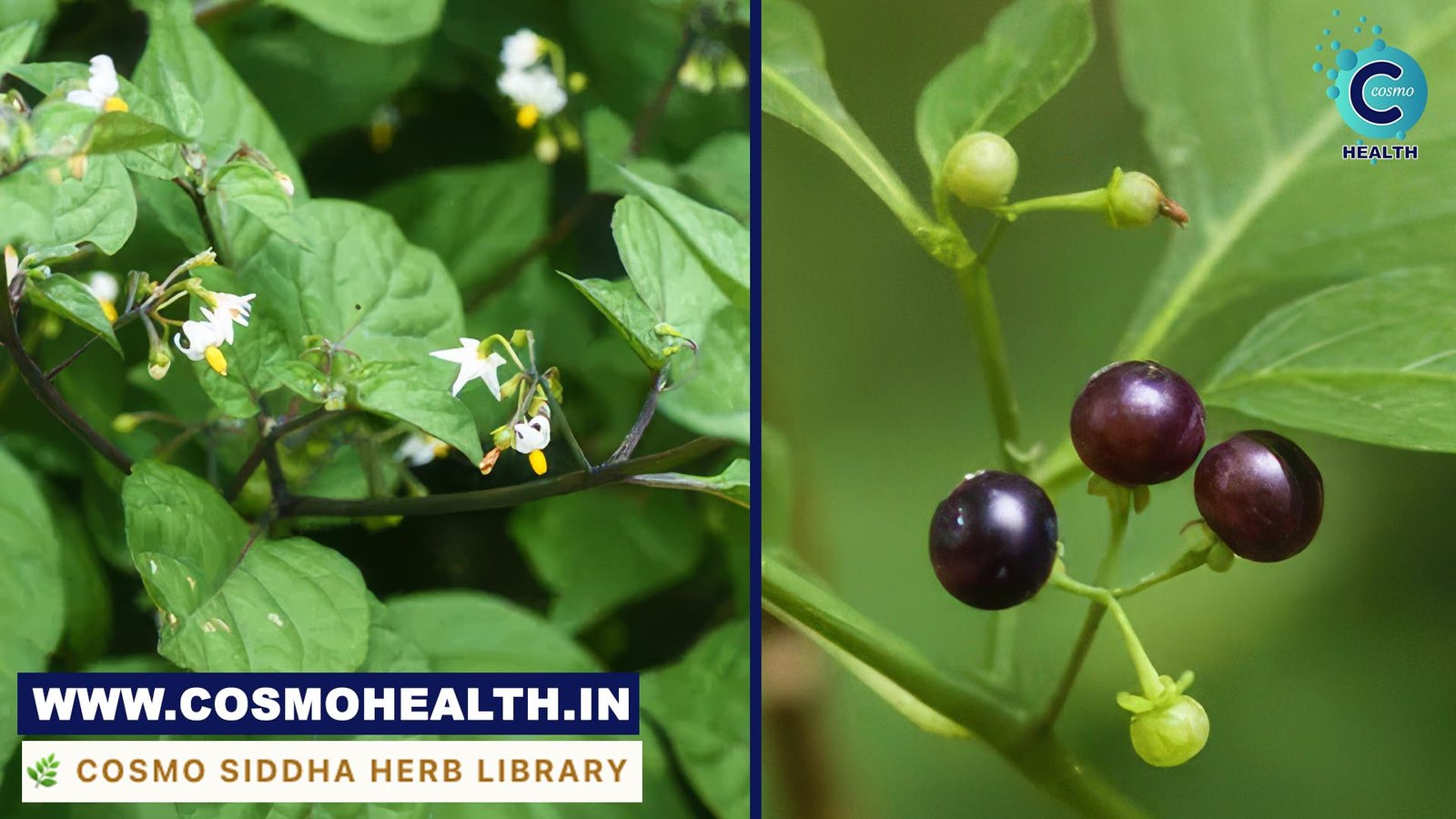
Black Nightshade (Manathakkali) is a revered Siddha herb, cooling, anti-inflammatory, and liver-protective, vital for wellness.
🌿 COSMO SIDDHA HERB LIBRARY
Manathakkali (மணத்தக்காளி)
A potent Siddha herb revered for its cooling and healing properties.
Black Nightshade, known as Manathakkali in Siddha, is a widely used medicinal herb. It is valued for its cooling, anti-inflammatory, and hepatoprotective properties, especially beneficial for skin ailments, liver health, and digestive well-being.
🌱 What is Black Nightshade (Manathakkali)?
Verify Solanum nigrum by its characteristic small white flowers and clusters of shiny black ripe berries. Unripe berries are green.
🌿 Manathakkali (மணத்தக்காளி)
Black Nightshade (Solanum nigrum)
How to Identify Black Nightshade (Manathakkali)
👁️ Distinctive Appearance
Leaves: Dark green, alternate, simple, ovate to lanceolate, with wavy or toothed margins, typically 2-7 cm long. They can be smooth or slightly hairy.
Stem: Branched, angular or ridged, often purplish, smooth or slightly hairy, growing upright or sprawling, forming a bushy plant.
Fruit/Flower: Small, spherical berries, typically 5-9 mm in diameter. Unripe berries are green, ripening to shiny black or sometimes purple, red, or yellow. They grow in clusters and contain numerous small, flattened seeds.
🌱 Where Black Nightshade Grows
Solanum nigrum is a ubiquitous weed found globally, thriving in various environments due to its remarkable adaptability and resilience.
- India
- Africa
- Europe
- Asia
- Americas
⚠️ Do not confuse with Belladonna (Deadly Nightshade)
Black Nightshade (Solanum nigrum) has smaller berries in clusters, usually shiny black when ripe, and small white flowers. Belladonna (Atropa belladonna) has larger, solitary purple-black berries and bell-shaped purple flowers. Belladonna is highly toxic, unlike ripe Black Nightshade berries which are edible in moderation.
Black Nightshade in Siddha Medicine
Traditional Reference Traditional Reference 🟤
Known as Manathakkali (மணத்தக்காளி), it is highly valued for its 'Veppam Kattral' (cooling) property. Used to balance Pitta dosha, treat inflammatory conditions, skin diseases, liver disorders, and digestive issues like ulcers, promoting overall systemic balance.
📖 Siddha Texts & References
Meaning: This fruit grants rejuvenation (Kaya Siddhi), cures diseases of the limbs and body – lovingly, countless diseases from the body are removed by consuming Manathakkali.
Associated Siddhar
Agathiyar
Agathiyar, the foremost Siddhar, is traditionally associated with the profound knowledge and classification of numerous medicinal herbs. His teachings emphasize the 'Pitha Nasini' (Pitta-reducing) and cooling properties of herbs like Manathakkali for holistic health and longevity.
Siddha Uses and Therapeutic Effects
🌿 Traditional Siddha Uses
Traditional Use 🟤- Liver Health: Used as a hepatoprotective agent, beneficial for jaundice, fatty liver, and general liver detoxification. It aids in improving liver function and preventing damage, supporting detoxification pathways.
- Skin Disorders: Applied externally and consumed internally for skin conditions like eczema, psoriasis, boils, fungal infections, and hives due to its anti-inflammatory, antiseptic, and cooling properties.
- Digestive Aid: Effective in treating mouth ulcers, stomach ulcers, gastritis, and other inflammatory conditions of the digestive tract. The leaves are often consumed in soups or poriyals to soothe inflammation.
- Anti-inflammatory: Possesses significant anti-inflammatory actions, making it useful for reducing swelling and pain in conditions like arthritis, joint pain, and general inflammatory responses throughout the body.
- Cooling Agent: Known for its 'Veppam Kattral' (cooling) property, it helps to reduce excess body heat (Pitta dosha), providing relief from heat-related ailments like burning sensation, fever, and excess thirst.
🧬 Modern Research & Evidence
Research Evidence 🔵Contemporary scientific studies are exploring and validating the traditional uses of Solanum nigrum, confirming its pharmacological potential.
- Hepatoprotective Activity: Numerous studies confirm its ability to protect the liver from various toxins and reduce elevated liver enzyme levels, strongly supporting its traditional use for liver ailments and recovery.
- Anti-inflammatory and Analgesic Effects: Research indicates compounds in Solanum nigrum have potent anti-inflammatory and pain-relieving properties, consistent with its use in inflammatory conditions and pain management.
- Antioxidant Potential: Rich in antioxidants like flavonoids and phenolic compounds, it helps combat oxidative stress and protects cells from damage caused by free radicals, contributing to overall health.
- Anticancer Properties: Preliminary in-vitro and in-vivo studies suggest potential anticancer effects against various cancer cell lines, particularly through inducing apoptosis, though more human trials are needed.
- Antimicrobial Activity: Extracts have shown inhibitory effects against certain bacteria, fungi, and viruses, supporting its traditional use in treating infections and promoting wound healing.
⚠️ Safety & Warnings
Natural does not always mean safe. Always use medicinal herbs with caution, knowledge, and under expert guidance.
Who should be careful?
- Pregnant and breastfeeding women should avoid use unless specifically advised by a qualified Siddha practitioner.
- Individuals with known allergies to the Solanaceae family (e.g., tomatoes, potatoes, bell peppers).
- Patients with pre-existing liver or kidney conditions should consult a doctor before use.
- Children should only consume ripe berries and leaves in very small quantities and under strict supervision.
- Always ensure berries are fully ripe before consumption; unripe berries are toxic and can cause severe symptoms.
Potential Side Effects
When consumed in excessive amounts, especially unripe parts or incorrectly prepared, Black Nightshade can cause nausea, vomiting, abdominal pain, diarrhea, drowsiness, headache, and in severe cases, neurological symptoms due to solanine alkaloids. Proper preparation and dosage are crucial to avoid these effects. Discontinue use if adverse reactions occur.
🌿 Quick Summary
📚 Sources & References
- Siddha Vaithiya Thirattu (சித்தா வைத்தியத் திரட்டு)
- Indian Materia Medica
- Journal of Ethnopharmacology
- PubMed Research Articles on Solanum nigrum
- Traditional Siddha Texts and Oral Traditions