


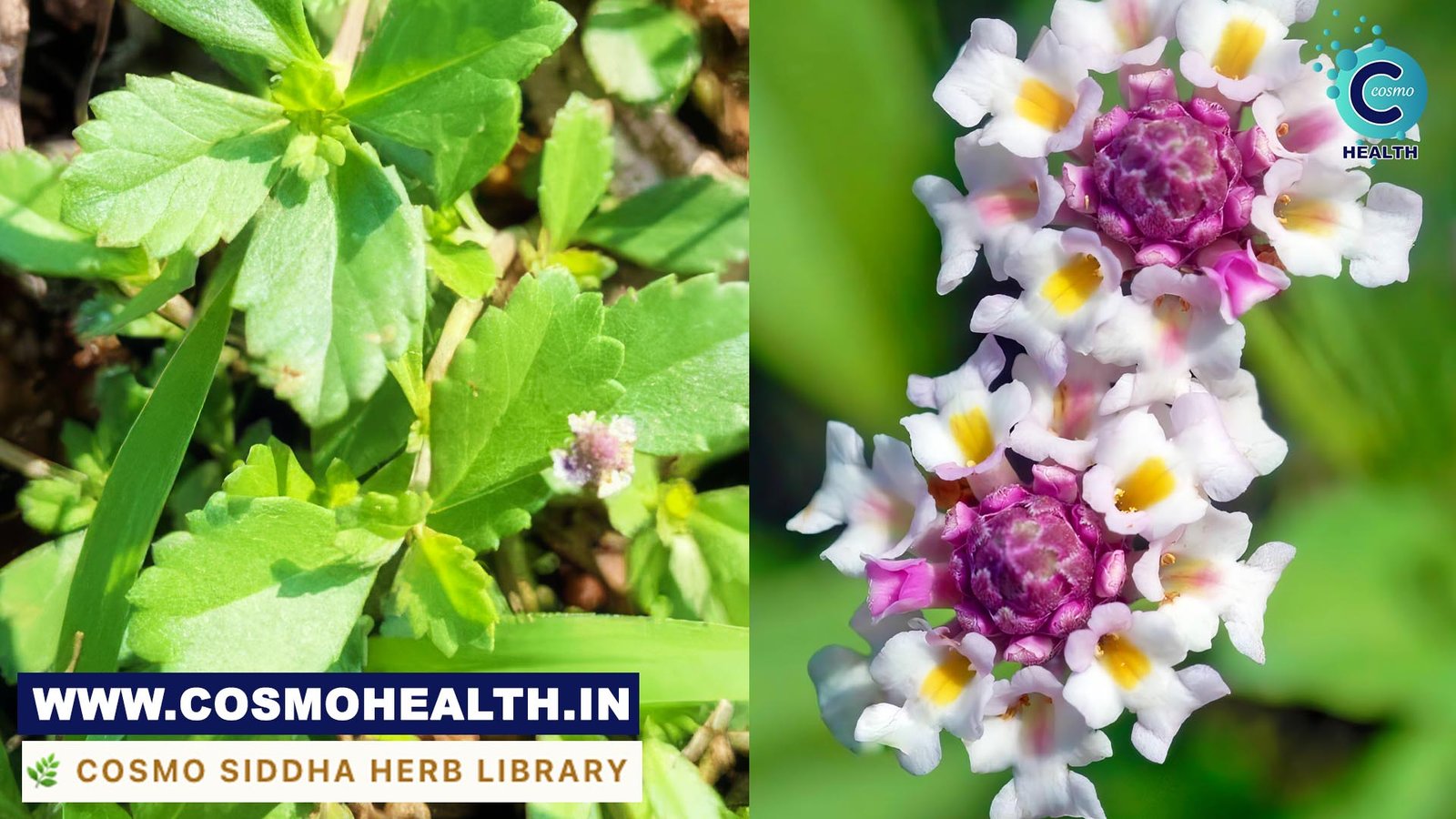
Frog Fruit: A low-growing, medicinal herb used in Siddha for its cooling properties and diverse healing applications.
🌿 COSMO SIDDHA HERB LIBRARY
Frog Fruit
A creeping wonder, revered in Siddha for its cooling and healing prowess.
Frog Fruit, scientifically known as Phyla nodiflora, is a versatile creeping perennial herb. It's highly valued in Siddha medicine for its remarkable cooling properties and its efficacy in treating a range of ailments, particularly those related to heat imbalances in the body.
🌱 What is Frog Fruit?
Verify herb Phyla nodiflora
🌿 Frog Fruit
Frog Fruit, Turkey Tangle Fogfruit, Creeping Charlie (Phyla nodiflora)
How to Identify Frog Fruit
👁️ Appearance
Leaves: Small, obovate to spatulate leaves, typically 1-2.5 cm long, with serrated margins, often appearing in opposing pairs along the stem.
Stem: Slender, creeping stems that root at nodes, forming dense mats. Stems are often reddish or purplish, sparsely hairy.
Fruit/Flower: Tiny, inconspicuous dry fruits (schizocarps) that split into two nutlets, enclosed within the persistent calyx after flowering.
🌱 Where it Grows
Frog Fruit is a highly adaptable plant found in various moist environments across tropical and subtropical regions worldwide.
- Wetlands and marshes
- Stream and river banks
- Disturbed sites like roadsides and agricultural fields
- Lawns and garden areas (often considered a 'weed')
⚠️ Do Not Confuse With
Can sometimes be confused with other low-growing groundcovers like Lippia repens or even some species of Veronica, but Phyla nodiflora is distinguished by its specific flower structure (small white-to-pinkish clusters) and leaf shape.
Frog Fruit in Siddha Medicine
Traditional Reference Traditional Reference 🟤
Known as 'Neermulli' or 'Poduthalai' in some traditions, Frog Fruit is a potent coolant, diuretic, and antipyretic. It is traditionally used to balance Pitta dosha and treat conditions arising from excess body heat.
📖 Siddha Texts
Meaning: By the grace of the water-herb (Neermulli), body heat subsides, and diseases flee. It is a great medicine for Pitta imbalances; praise its virtues for granting well-being.
Associated Siddhar
Agathiyar
While not directly attributed to a single Siddhar's specific formulation for Frog Fruit, its use aligns with the foundational principles taught by Siddhar Agathiyar regarding herbal remedies for balancing bodily humors, particularly Pitta.
Uses and Effects
🌿 Traditional Uses
Traditional Use 🟤- Fever and Heat-related Ailments: The whole plant is used to reduce fever, cool the body, and alleviate thirst associated with high temperatures.
- Urinary Tract Disorders: Due to its diuretic properties, it's used to support kidney function, reduce water retention, and help with urinary infections.
- Skin Conditions: Pastes of the leaves are applied externally to soothe skin irritations, rashes, and boils caused by excess heat.
- Digestive Issues: Used for conditions like gastritis and acidity, where its cooling nature helps in reducing inflammation and discomfort.
- Hair and Scalp Health: Traditionally used to promote hair growth and treat scalp conditions like dandruff and fungal infections, especially when associated with heat.
🧬 Modern Research
Research Evidence 🔵Contemporary scientific studies are exploring Frog Fruit's traditional uses, revealing promising pharmacological activities that support its ancient applications.
- Anti-inflammatory and Analgesic Activity: Studies have indicated that extracts of Phyla nodiflora possess significant anti-inflammatory and pain-relieving effects, validating its traditional use for reducing swelling and discomfort.
- Antioxidant Properties: Research shows the plant is rich in flavonoids and phenolics, contributing to strong antioxidant activity, which helps combat oxidative stress and cellular damage.
- Antimicrobial Effects: Extracts have demonstrated antimicrobial properties against various bacteria and fungi, supporting its use in treating infections and promoting wound healing.
- Hepatoprotective Activity: Some studies suggest its potential in protecting the liver from damage due to its antioxidant and anti-inflammatory compounds.
⚠️ Safety & Warnings
While natural, any medicinal herb, including Frog Fruit, must be used with caution and under expert guidance to ensure safety and efficacy.
Who should be careful
- Pregnant and Breastfeeding Women: Avoid use or consult a physician.
- Individuals with Known Allergies: Discontinue use if allergic reactions occur.
- People on Diuretics or Blood Pressure Medications: Consult a doctor due to potential additive effects.
- Children and Infants: Administer with extreme caution and only under professional guidance.
Side Effects
Generally considered safe when used appropriately. High doses may potentially cause mild gastrointestinal upset. Always adhere to recommended dosages and consult a Siddha doctor if adverse effects occur.
🌿 Quick Summary
📚 Sources
- Siddha Vaithiya Thirattu
- The Siddha Pharmacopoeia of India
- Journal of Ethnopharmacology
- Research articles on Phyla nodiflora