


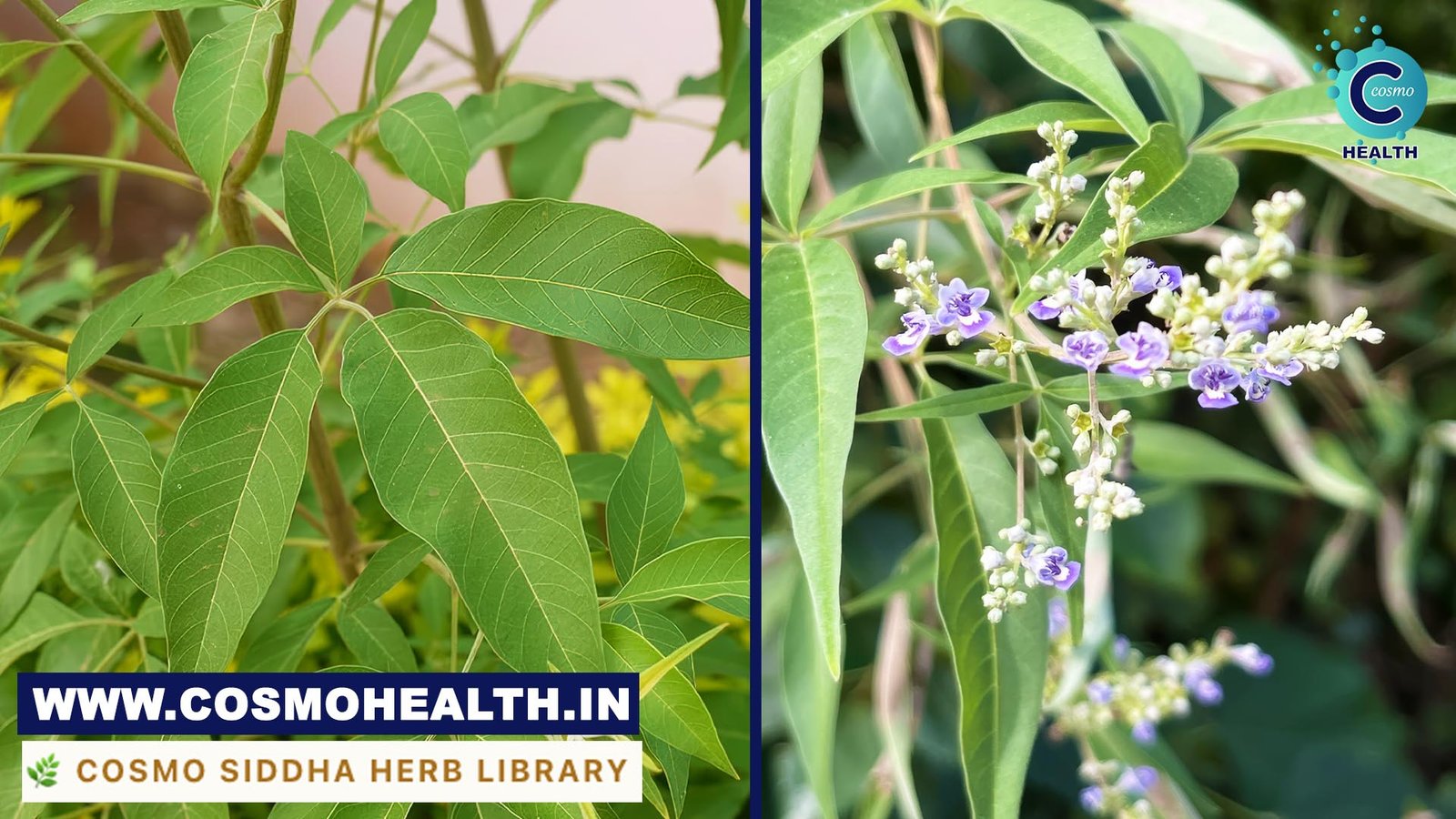
A powerful multi-faceted herb, Nochi offers profound analgesic, anti-inflammatory, and antimicrobial benefits.
🌿 COSMO SIDDHA HERB LIBRARY
Nochi (Tamil), Nirgundi (Sanskrit)
The versatile Siddha herb known for pain relief and respiratory health.
The Five-leaved Chaste Tree, or Nochi, is a highly esteemed herb in Siddha medicine. Known for its distinct aromatic leaves and diverse therapeutic properties, it is a staple in remedies for pain, inflammation, and various respiratory ailments.
🌱 What is the Five-leaved Chaste Tree (Nochi)?
Verify the authenticity of this herb through its unique leaf structure and aromatic scent. Consult a Siddha expert for confirmation.
🌿 Nochi (Tamil), Nirgundi (Sanskrit)
Five-leaved Chaste Tree (Vitex negundo L.)
How to Identify the Five-leaved Chaste Tree
👁️ Key Physical Characteristics
Leaves: Leaves are palmate, typically with 3 to 5 (sometimes 7) leaflets radiating from a central point. The upper surface is green, and the lower surface is greyish-white and finely hairy. They have a characteristic strong, aromatic odor when crushed.
Stem: The stem is often woody, branched, and can be light brown to grey. Young branches are slender, quadrangular, and densely covered with white, woolly hairs.
Fruit/Flower: Small, globose to ovoid drupes, about 4mm in diameter, turning purplish-black when ripe. Each fruit contains 4 seeds.
🌱 Where the Five-leaved Chaste Tree Grows
This resilient plant is widely distributed across various regions, thriving in diverse environmental conditions.
- Indian Subcontinent (India, Sri Lanka, Bangladesh)
- Southeast Asia (Myanmar, Thailand, Malaysia, Indonesia, Philippines)
- East Asia (China, Japan, Korea)
- Africa (parts of Eastern and Southern Africa)
⚠️ Do Not Confuse With
While *Vitex trifolia* (Three-leaved Chaste Tree) is closely related and has similar properties, *Vitex negundo* is distinguishable by its predominantly five-fingered leaves and often more upright growth habit. *Vitex trifolia* usually has three leaflets.
Five-leaved Chaste Tree in Siddha Medicine
Traditional Reference Traditional Reference 🟤
In Siddha, Nochi is highly revered for its ability to balance Vata and Kapha doshas. It is a potent 'Ushna Veeryam' (hot potency) herb used extensively for its anti-inflammatory, analgesic, febrifuge, and antimicrobial actions. It's especially valued for alleviating pain, respiratory complaints, and promoting wound healing.
📖 Mention in Siddha Texts
Meaning: Nochi leaves alleviate diseases, relieve joint pain. Calms asthma and removes phlegm. Decoction for fever, poultice for wounds. Maintains body heat, a medicine found by Siddhas.
Associated Siddhar
Agathiyar
Agathiyar, the foremost Siddhar, is traditionally credited with compiling vast knowledge of medicinal plants, including Nochi. His teachings, documented in various Siddha texts, elaborate on the therapeutic uses and preparations of Nochi for a wide array of ailments.
Uses and Effects of Five-leaved Chaste Tree
🌿 Traditional Siddha Uses
Traditional Use 🟤- Pain and Inflammation: Leaves are used as a poultice or boiled for fomentation to relieve joint pain, arthritis, sprains, and muscle pain. Its potent analgesic and anti-inflammatory properties are well-regarded.
- Respiratory Ailments: Decoctions of leaves are used to treat cough, cold, asthma, and bronchitis. Inhaling steam from boiling Nochi leaves helps clear nasal congestion and respiratory passages.
- Fever and Headaches: Used as a febrifuge. Leaf paste applied to the forehead helps relieve headaches, especially those associated with cold or sinusitis.
- Wound Healing and Skin Conditions: Antimicrobial and anti-inflammatory properties make it useful for cleaning and healing wounds, ulcers, and skin infections. A paste or oil prepared from leaves is applied topically.
- Insect Repellent: The aromatic leaves are traditionally used to repel mosquitoes and other insects when placed in living spaces.
🧬 Modern Research and Evidence
Research Evidence 🔵Contemporary scientific studies have begun to validate many traditional uses of Vitex negundo, exploring its phytochemical composition and pharmacological activities.
- Anti-inflammatory and Analgesic Activity: Studies have confirmed the presence of compounds like flavonoids and terpenoids in Vitex negundo, which exhibit significant anti-inflammatory and pain-relieving effects, supporting its traditional use in arthritis and pain management.
- Antimicrobial and Antifungal Properties: Research indicates that extracts of Vitex negundo possess broad-spectrum antimicrobial activity against various bacteria and fungi, validating its use in treating infections and promoting wound healing.
- Hepatoprotective and Antioxidant Effects: Modern research suggests that Vitex negundo has hepatoprotective properties and acts as an antioxidant, helping to protect liver cells from damage and combat oxidative stress.
- Insecticidal and Larvicidal Activity: The plant's extracts have shown effectiveness as a natural insecticide and larvicide against various insect pests, corroborating its traditional use as an insect repellent.
⚠️ Safety & Warnings
While derived from nature, proper knowledge of dosage and individual constitution is vital for safe and effective use. 'Natural' does not always mean 'safe for everyone'.
Who Should Be Careful?
- Pregnant and breastfeeding women should avoid use without strict medical supervision due to potential effects on hormonal balance.
- Individuals on blood-thinning medications should use with caution, as some compounds might interact.
- Those with known allergies to plants in the Lamiaceae family should exercise caution.
- Prolonged internal use without expert guidance is not recommended.
Potential Side Effects
Generally considered safe for external and short-term internal use at recommended dosages. Rare side effects may include mild gastrointestinal upset or skin irritation in sensitive individuals. Always consult a Siddha practitioner for personalized advice.
🌿 Quick Summary of Five-leaved Chaste Tree (Nochi)
📚 Sources
- Siddha Vaidya Thirattu (Traditional Siddha Text)
- Agathiyar Gunavagadam (Traditional Siddha Text)
- The Siddha Pharmacopoeia of India
- Review articles on *Vitex negundo* in ethnobotany and pharmacology journals
- Personal clinical experience as a Siddha physician