


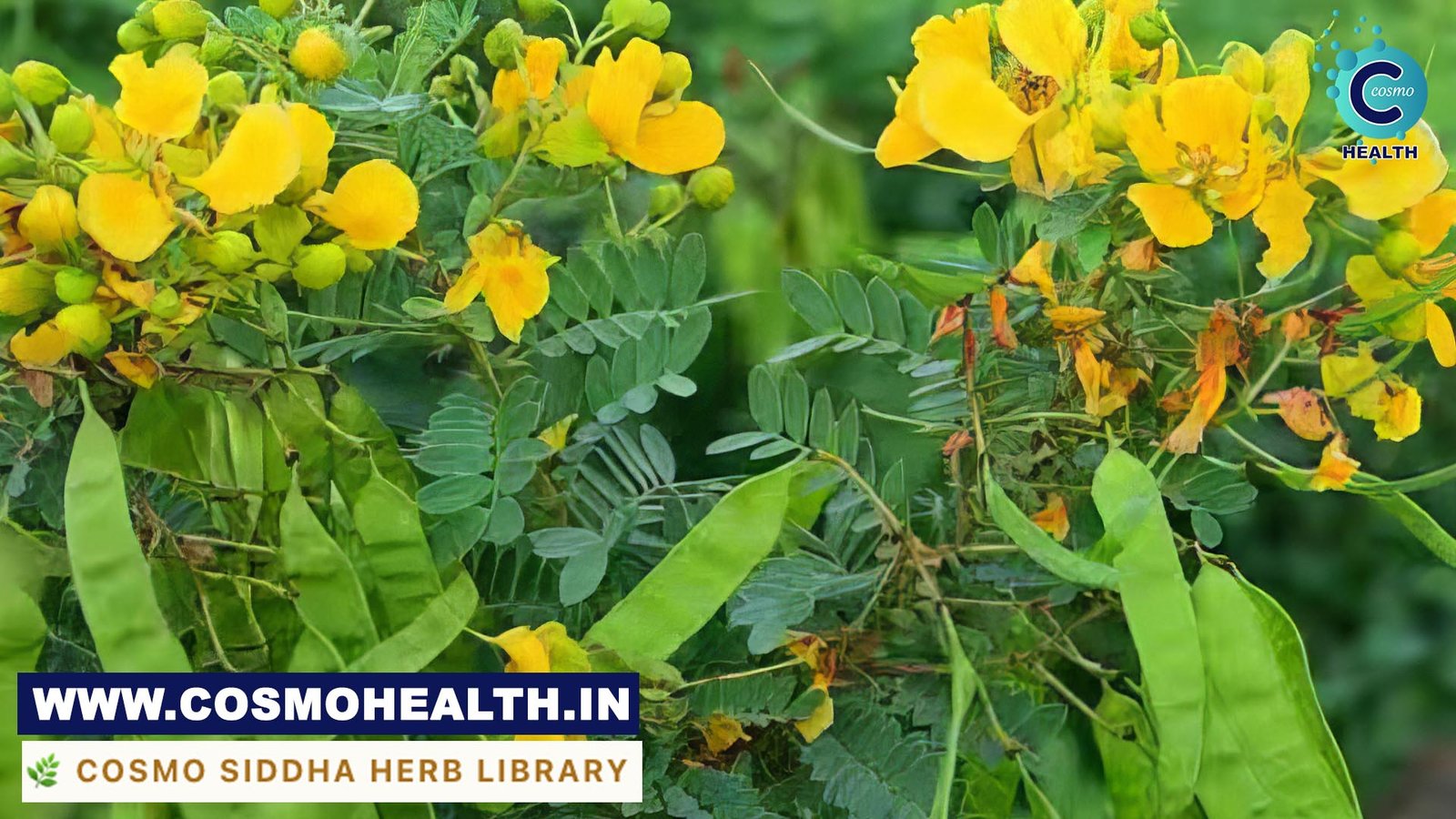
A versatile shrub known for its vibrant yellow flowers, revered in Siddha for skin health and blood sugar balance.
🌿 COSMO SIDDHA HERB LIBRARY
Avaram (ஆவாரம்)
The golden bloom with potent medicinal properties for health and healing.
Tanner's Cassia, or Avaram, is a medium-sized shrub native to dry regions of Asia. Its distinctive bright yellow flowers and leathery leaves are extensively utilized in Siddha medicine for a wide array of therapeutic benefits, particularly for skin and metabolic health.
🌱 What is Tanner's Cassia (Avaram)?
Verify the distinctive yellow flowers and pinnate leaves to confirm identification.
🌿 Avaram (ஆவாரம்)
Tanner's Cassia (Senna auriculata (L.) Roxb.)
How to Identify Tanner's Cassia (Avaram)
👁️ Appearance
Leaves: Leaves are pinnately compound, with 8-12 pairs of oblong-obovate leaflets, typically rounded at the apex. A small, erect gland is present between each pair of leaflets.
Stem: The stem is woody, highly branched, with a grayish-brown bark that tends to peel in strips on older plants.
Fruit/Flower: The fruit is a flat, papery, thin, indehiscent pod, usually 7-10 cm long and 1-1.5 cm wide, pale brown when mature, containing 10-20 seeds.
🌱 Where Tanner's Cassia Grows
Tanner's Cassia thrives in dry, open habitats across South Asia and parts of Africa.
- India (especially Southern India)
- Sri Lanka
- Myanmar
- Pakistan
- Tropical Africa
⚠️ Do Not Confuse With
While other *Senna* species exist, *Senna auriculata* is distinguished by its specific gland placement between leaflets and its dense clusters of bright yellow flowers. Some other *Cassia* species may have similar yellow flowers but differ in leaf structure or pod morphology.
Tanner's Cassia in Siddha Medicine
Traditional Reference Traditional Reference 🟤
Avaram is a highly valued herb in Siddha, primarily known for its cooling properties (Seethaveerya) and its ability to balance Pitta and Kapha doshas. It's extensively used for blood purification, diabetes management, skin ailments, and urinary disorders.
📖 Siddha Texts Referencing Avaram
Meaning: When Avaram flowers, why the need for a 'death shroud' (death)? Why need to sing 'Thevaram' (devotional hymns for relief)? This implies Avaram is such a potent medicine that it prevents diseases leading to death, making other remedies unnecessary.
Associated Siddhar
Agathiyar
Agathiyar is widely revered as the father of Siddha medicine and is often credited with vast knowledge of medicinal plants, including Avaram, and their therapeutic applications.
Uses and Effects of Tanner's Cassia
🌿 Traditional Uses
Traditional Use 🟤- Diabetes Management: Flowers and bark are used to prepare decoctions and powders believed to help regulate blood sugar levels.
- Skin Ailments: Flower and leaf pastes are applied externally to treat skin rashes, itching, boils, and improve complexion.
- Urinary Disorders: The plant's diuretic properties are utilized to treat urinary tract infections and alleviate symptoms of painful urination.
- Eye Health: Flower extracts are traditionally used in eye washes for conjunctivitis and general eye irritation.
- Liver Support: Used as a hepatoprotective agent to support liver function and detoxify the body.
- Leucorrhoea: The bark and roots are used in formulations to address excessive vaginal discharge.
- Anthelmintic: Traditionally used to expel intestinal worms.
🧬 Modern Research and Evidence
Research Evidence 🔵Contemporary scientific studies have begun to explore and validate many of the traditional uses of Tanner's Cassia, identifying key bioactive compounds responsible for its therapeutic actions.
- Antidiabetic Activity: Studies have shown that extracts of S. auriculata flowers and bark possess hypoglycemic effects, attributed to compounds like flavonoids and tannins, which may enhance insulin secretion or improve glucose utilization.
- Antioxidant Properties: Rich in flavonoids and phenolic compounds, S. auriculata exhibits significant antioxidant activity, helping to combat oxidative stress and protect cells from damage.
- Antimicrobial Effects: Research indicates that various parts of the plant have antibacterial and antifungal properties against several pathogens, supporting its traditional use in treating infections.
- Anti-inflammatory Action: Extracts have demonstrated anti-inflammatory effects in animal models, suggesting potential for managing inflammatory conditions.
- Hepatoprotective Activity: Some studies suggest that S. auriculata can protect the liver from chemical-induced damage, validating its traditional use for liver support.
⚠️ Safety & Warnings
Remember, 'natural' does not always mean 'safe.' Herbal remedies can interact with medications or have contraindications.
Who Should Be Careful
- Pregnant and Lactating Women: Insufficient data; use with caution or avoid.
- Diabetic Patients: May lower blood sugar; monitor glucose levels closely if on antidiabetic medication.
- Individuals with Kidney or Liver Conditions: Consult a physician before use.
- Allergies: Individuals sensitive to plants in the Fabaceae family may experience allergic reactions.
Side Effects
Side effects are rare when used appropriately. However, sensitive individuals may experience mild gastrointestinal discomfort, such as stomach upset or diarrhea, especially with high doses. Discontinue use if adverse reactions occur.
🌿 Quick Summary
📚 Sources
- Siddha Pharmacopoeia of India
- Agathiyar Vaidya Valladhi
- Research articles on Senna auriculata (e.g., Journal of Ethnopharmacology, Phytomedicine)
- Traditional Siddha practitioners and texts