


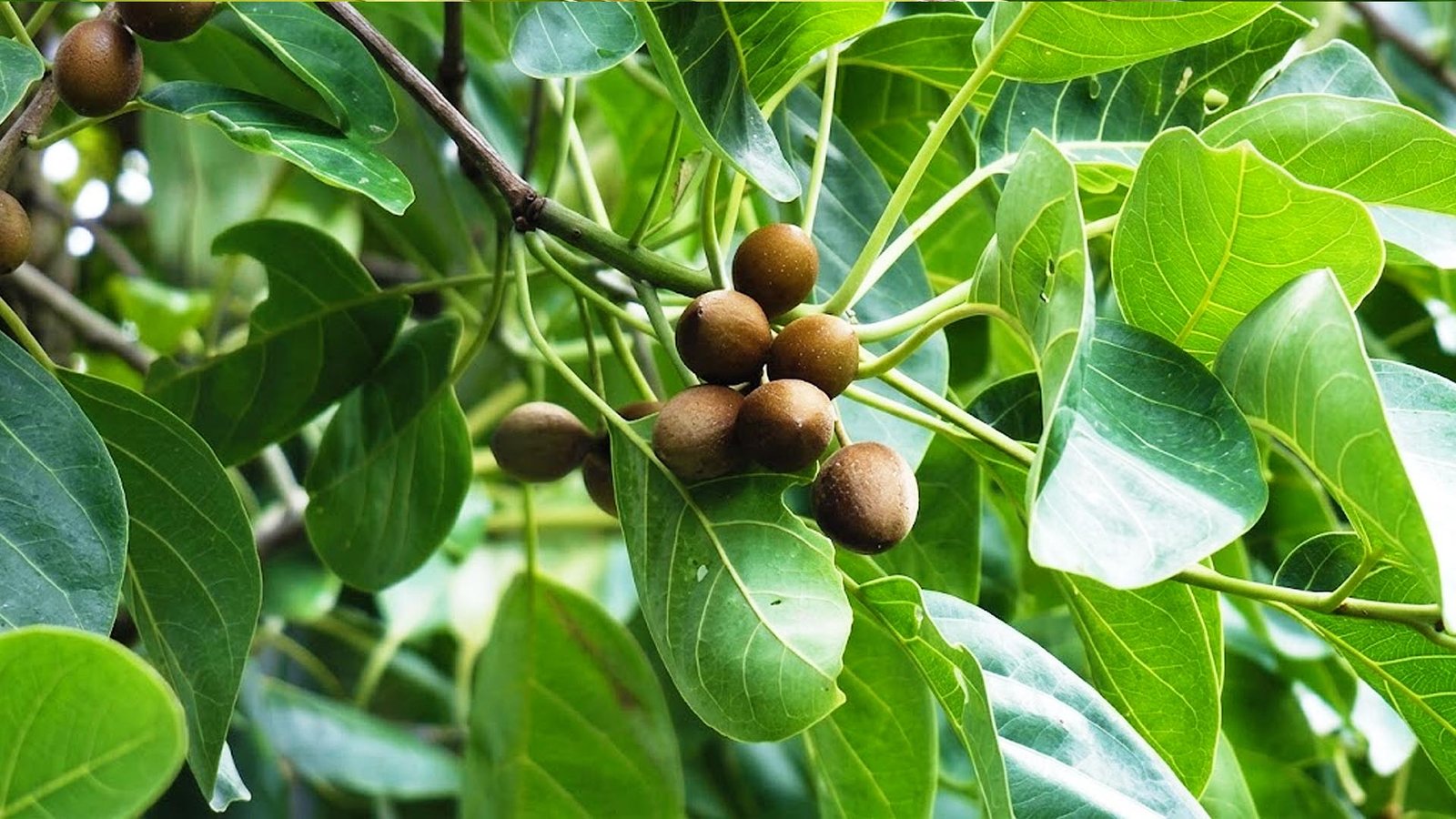
A powerful detoxifier and rejuvenator, தான்றிக்காய் is a core ingredient in Triphala, promoting digestion & respiratory health.
🌿 COSMO SIDDHA HERB LIBRARY
Beleric Myrobalan
The versatile fruit for holistic wellness, revered in Siddha medicine.
Terminalia bellirica, known as தான்றிக்காய் in Tamil, is a large deciduous tree. Its dried fruit is a cornerstone of traditional Siddha and Ayurvedic medicine, prized for its diverse therapeutic properties, particularly in detoxification and respiratory care.
Amla, Haritaki, Neem
🌱 What is தான்றிக்காய் (Beleric Myrobalan)?
Verified information by expert Siddha doctors and botanists.
🌿 Beleric Myrobalan
Beleric Myrobalan, Bahera, Bastard Myrobalan, Bedda Nut (Terminalia bellirica (Gaertn.) Roxb.)
How to identify தான்றிக்காய்
👁️ Appearance
Leaves: Leaves are large, broadly elliptic to obovate, clustered at the ends of branches, glossy green, often hairy on the underside.
Stem: The trunk is straight, with grayish-black bark, often longitudinally cracked. Branches spread widely.
Fruit/Flower: The fruit is a subglobose to ovoid drupe, 2-3 cm long, grayish-yellow, somewhat velvety, with 5 indistinct ridges when dried. Contains a hard stone.
🌱 Where it grows
தான்றிக்காய் is native to South and Southeast Asia and is widely distributed across various regions.
- India
- Nepal
- Sri Lanka
- Myanmar
- Thailand
- Vietnam
- Malaysia
⚠️ Do not confuse with
While part of the Triphala combination with Amla (Phyllanthus emblica) and Haritaki (Terminalia chebula), its fruit shape and size are distinct. Amla is smaller and rounder, Haritaki is elongated with distinct ridges. தான்றிக்காய் is more spherical and slightly hairy when fresh.
Siddha Medicine Perspective
Traditional Reference Traditional Reference 🟤
தான்றிக்காய் is traditionally used in Siddha for its laxative, astringent, expectorant, and rejuvenating properties. It balances 'Kapha' and 'Pitta' doshas, making it effective for respiratory issues, digestive disorders, and skin conditions. It's a key ingredient in Triphala.
📖 References in Siddha Texts
Meaning: This poem highlights the benefits of தான்றிக்காய் for improving vision (தீபங்கள் தங்குமக்கண்ணி), alleviating respiratory issues (காற்றது தீரக் கட்டுண்ணும், நாசியில் சளிபோக நண்ணும் - relieving cold and nasal congestion), and balancing 'Vatha' dosha (நேசம் வாதந்தீர வகுத்தவிசை).
Associated Siddhar
Agathiyar
Agathiyar, one of the foremost Siddhas, is revered for his extensive contributions to Siddha medicine, including the classification of herbs and their therapeutic uses. His teachings form the bedrock for understanding தான்றிக்காய்'s role in health.
Uses and Effects of தான்றிக்காய்
🌿 Traditional Uses
Traditional Use 🟤- Digestive Health: Acts as a mild laxative, aids digestion, and helps in managing constipation. Balances gut flora.
- Respiratory Support: Effective in treating cough, cold, asthma, and bronchitis due to its expectorant and anti-inflammatory properties.
- Eye Health: Believed to improve eyesight and protect against various eye conditions when used externally or internally.
- Hair Care: Used in hair oils and packs to strengthen hair, prevent premature graying, and promote hair growth.
- Skin Disorders: Applied topically for skin infections, wounds, and various dermatological conditions due to its astringent and antimicrobial nature.
🧬 Modern Research & Evidence
Research Evidence 🔵Recent scientific studies are exploring and validating many traditional uses of Terminalia bellirica.
- Antioxidant Activity: Studies have shown that தான்றிக்காய் extracts possess significant antioxidant properties, protecting cells from oxidative damage.
- Antimicrobial Effects: Research confirms its efficacy against various bacteria and fungi, supporting its traditional use in infections.
- Anti-inflammatory Potential: Investigations indicate its compounds can reduce inflammation, beneficial for conditions like arthritis and respiratory inflammation.
- Hepatoprotective Activity: Some studies suggest protective effects on the liver, helping to maintain liver health.
⚠️ Safety & Warnings
While தான்றிக்காய் is natural, it does not mean it is safe for everyone or in all conditions.
Who should be careful
- Pregnant and breastfeeding women (consult a doctor)
- Individuals with chronic illnesses or on medication (potential interactions)
- Children (administer with caution and expert guidance)
- Those with known allergies to plants in the Combretaceae family
Side Effects
Generally considered safe when used appropriately. Excessive dosage may lead to mild gastrointestinal discomfort, loose stools, or dehydration due to its laxative effect.
🌿 Quick Summary
📚 Sources
- Traditional Siddha Texts (e.g., Agathiyar Gunapadam)
- Ayurvedic Pharmacopoeia of India
- Botanical databases (e.g., Kew, NCBI)
- Pharmacognosy research journals