


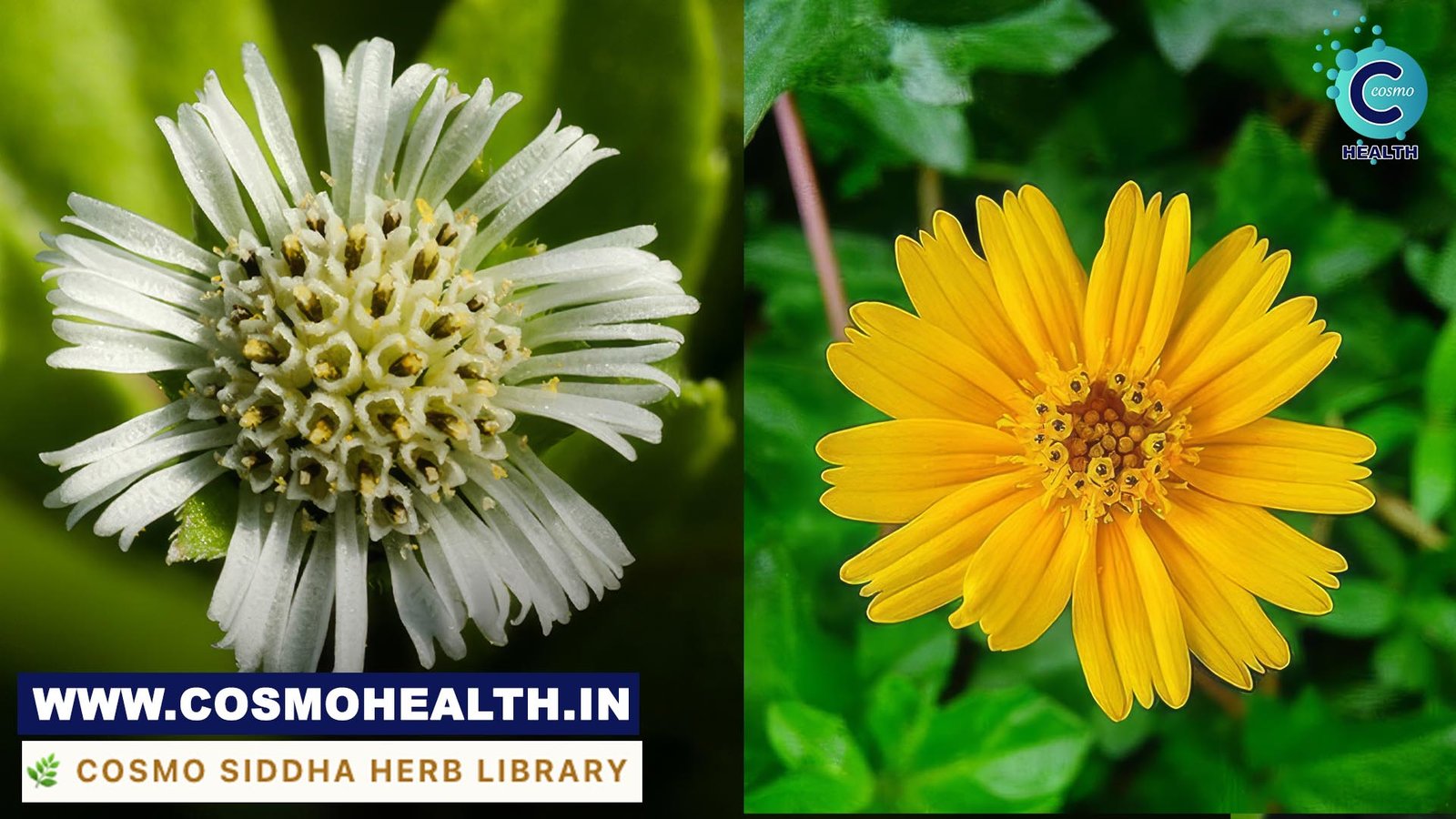
A prized Siddha herb, False Daisy supports lustrous hair, robust liver function, and rejuvenates the body. A true herbal powerhouse!
🌿 COSMO SIDDHA HERB LIBRARY
Karisalankanni (கரிசலாங்கண்ணி)
The potent Siddha herb for hair, liver, and overall rejuvenation.
False Daisy, known as Bhringraj in Sanskrit and Karisalankanni in Tamil, is a revered herb in Siddha and Ayurvedic medicine. It is a potent Rasayana (rejuvenator) widely recognized for its profound benefits on hair health, liver function, and overall well-being.
🌱 What is False Daisy / Bhringraj?
Verify False Daisy / Bhringraj
🌿 Karisalankanni (கரிசலாங்கண்ணி)
False Daisy / Bhringraj (Eclipta prostrata (formerly Eclipta alba))
How to Identify False Daisy / Bhringraj
👁️ Key Characteristics
Leaves: Leaves are simple, opposite, sessile or sub-sessile, lanceolate to oblong-lanceolate, 2-10 cm long, with serrate or entire margins, often slightly hairy on both surfaces.
Stem: The stem is cylindrical, often reddish-brown, branched, and can be erect or prostrate, rooting at the nodes. It is typically strigose (with stiff, appressed hairs).
Fruit/Flower: The fruit is a small, black, compressed achene (cypsela), usually winged or ridged along the margins, about 2-3 mm long.
🌱 Where it Grows Naturally
False Daisy thrives in warm, humid conditions and is widely distributed across various regions globally.
- India (especially South India)
- Southeast Asia
- Tropical and Subtropical Americas
- Africa
- Australia
⚠️ Do Not Confuse With
Sometimes confused with other weeds in the Asteraceae family due to similar small white flowers. However, *Eclipta prostrata* is distinguished by its unique black, winged achenes and the black liquid that oozes when the stem is crushed (hence 'Karisalankanni' meaning 'black-dyeing herb').
False Daisy in Siddha Medicine
Traditional Reference Traditional Reference 🟤
In Siddha, Karisalankanni is paramount for balancing Pitta and Kapha doshas. It's considered a potent 'Kayakalpa' herb, promoting longevity and vitality. It is especially renowned for strengthening hair roots, preventing premature greying and hair loss, promoting liver detoxification, and improving vision. It is also used for various skin ailments, fevers, and as a general tonic.
📖 Key Siddha Texts Mentioning Karisalankanni
Meaning: “Karisalankanni is said to grant 'Kaya Siddhi' (body perfection/immortality); Even if there were two bodies, they would become one (signifying profound rejuvenation and unity of mind-body).”
Associated Siddhar
Agathiyar
Siddhar Agathiyar, one of the foremost Siddhars, is often credited with profound knowledge and detailed descriptions of many potent herbs, including Karisalankanni. His teachings emphasize its use for 'Kayakalpa' (rejuvenation) and its role in maintaining bodily harmony and spiritual health.
Traditional & Modern Uses and Effects
🌿 Traditional Siddha Uses
Traditional Use 🟤- Hair Health: Promotes hair growth, prevents premature greying, reduces hair fall, and strengthens hair follicles. Used as a hair oil (Bhringraj oil) and internal tonic.
- Liver Support: Acts as a powerful hepatoprotective and liver tonic, beneficial in conditions like jaundice, hepatitis, and fatty liver. Aids detoxification.
- Eye Health: Improves vision and protects the eyes. Often used in formulations for eye disorders due to its cooling properties (Pitta pacifying).
- Skin Disorders: Applied topically as a paste or juice for skin conditions like eczema, ringworm, and other inflammatory skin issues due to its anti-inflammatory and antimicrobial properties.
- Digestive Aid: Helps in digestion and can alleviate stomach ailments due to its bitter and pungent taste, stimulating digestive fire.
- Anti-inflammatory: Reduces inflammation throughout the body, providing relief in various inflammatory conditions.
- General Tonic / Rasayana: Considered a rejuvenating herb that enhances overall vitality, immunity, and longevity.
🧬 Modern Research & Evidence
Research Evidence 🔵Contemporary scientific research has begun to validate many traditional claims of False Daisy, identifying various bioactive compounds responsible for its therapeutic effects.
- Hepatoprotective Activity: Studies have shown that *Eclipta prostrata* extracts possess significant hepatoprotective activity, protecting liver cells from damage induced by toxins and promoting regeneration.
- Hair Growth Promotion: Research confirms its ability to stimulate hair follicles, leading to accelerated hair growth and increased follicular density, supporting its traditional use in hair oils.
- Anti-inflammatory & Analgesic: Compounds in False Daisy exhibit anti-inflammatory and pain-relieving effects, which contribute to its use in managing inflammatory conditions.
- Antimicrobial & Antioxidant: It possesses antimicrobial properties against various pathogens and strong antioxidant activity, protecting cells from oxidative stress and enhancing overall health.
⚠️ Safety & Warnings
Remember, even natural remedies can have potent effects and potential side effects or interactions.
Who Should Be Careful?
- Pregnant and Breastfeeding Women: Avoid use unless specifically advised by a qualified practitioner.
- Children: Use with caution and only under expert guidance.
- Individuals on Blood Thinners: Contains coumarin derivatives, which may interact with anticoagulant medications.
- Individuals with Low Blood Sugar: May lower blood glucose levels; monitor closely if diabetic.
- Those Undergoing Surgery: Discontinue use at least two weeks before any scheduled surgery due to potential impact on blood clotting.
- People with known allergies to the Asteraceae family.
Potential Side Effects
While generally considered safe when used appropriately, some individuals may experience mild side effects such as indigestion, nausea, or diarrhea, especially with excessive dosages. Consult your practitioner if any adverse reactions occur.
🌿 Quick Summary
📚 References & Sources
- The Siddha Pharmacopoeia of India
- Traditional Siddha Texts (Agathiyar Vaidya Valladhi, Siddha Vaidya Thirattu)
- Journal of Ethnopharmacology
- Indian Journal of Traditional Knowledge
- Botanical Survey of India publications
- ResearchGate.net (for modern research articles)