


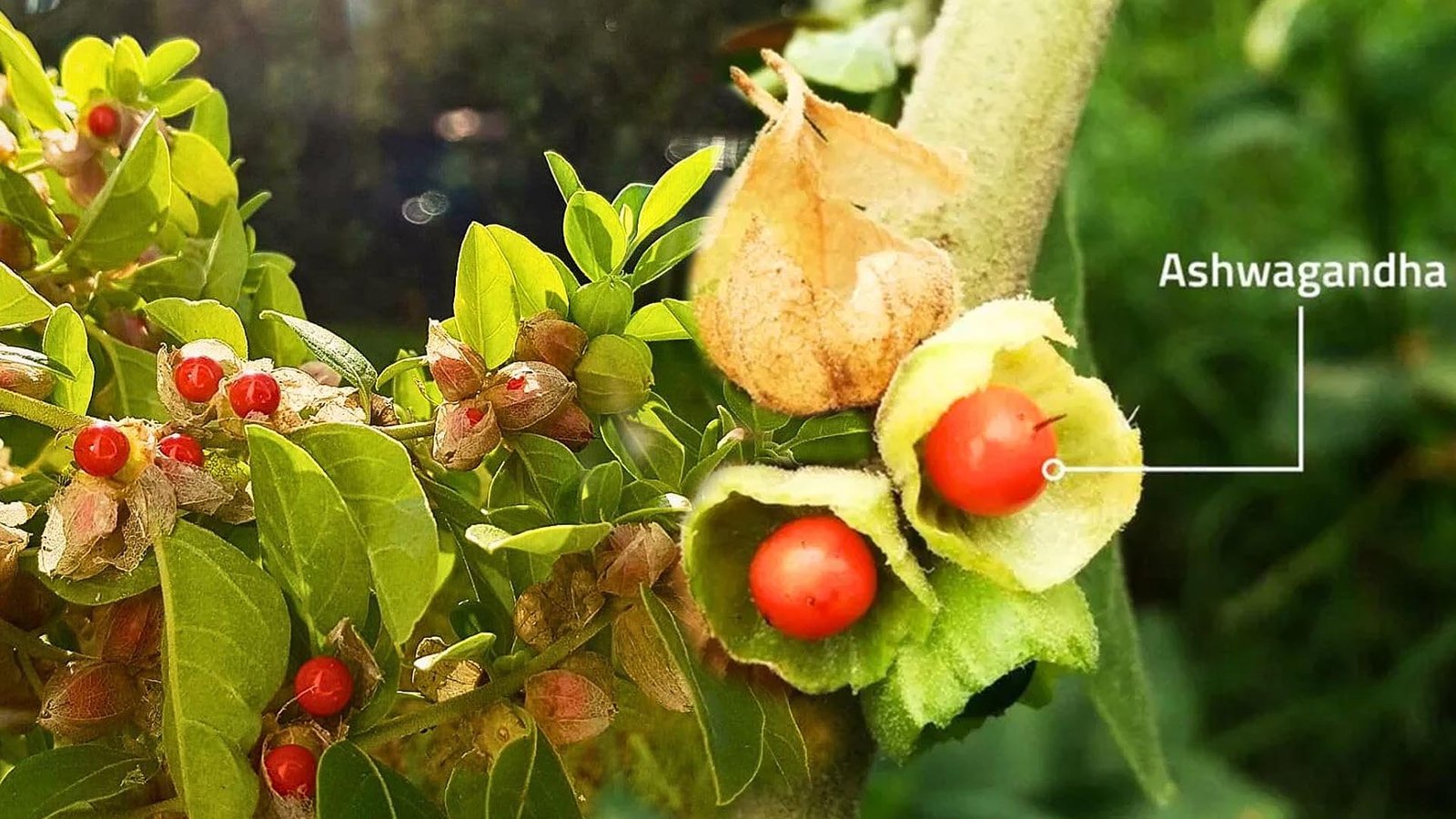
Ashwagandha: A potent adaptogen in Siddha, renowned for stress reduction, vitality, and overall rejuvenation.
🌿 COSMO SIDDHA HERB LIBRARY
Ashwagandha (அமுக்கராக் கிழங்கு)
Nature's tranquilizer and revitalizer for body and mind.
Ashwagandha is a revered herb in Siddha and Ayurvedic traditions, known for its adaptogenic properties. It helps the body manage stress, boosts energy, and supports overall well-being. Often called 'Indian Ginseng', it's a powerful rejuvenator.
Turmeric
🌱 What is Ashwagandha?
Verify this herb's identity through detailed images and descriptions below.
🌿 Ashwagandha (அமுக்கராக் கிழங்கு)
Indian Ginseng, Winter Cherry (Withania somnifera (L.) Dunal)
How to Identify Ashwagandha
👁️ Distinctive Features
Leaves: Simple, ovate, entire leaves, dull green, generally 5-10 cm long, covered with fine, stellate hairs, appearing downy.
Stem: Erect, branched, usually woody at the base, with fine, silvery-white hairs, cylindrical, often multiple stems arising from the base.
Fruit/Flower: Small, spherical berries, enclosed within an inflated, papery calyx (like a small Chinese lantern), turning orange-red when ripe. Seeds are small and yellowish.
🌱 Geographical Distribution
Ashwagandha is indigenous to the Indian subcontinent but has adapted to various arid and semi-arid regions globally.
- India (Rajasthan, Madhya Pradesh, Uttar Pradesh)
- Nepal
- China
- Yemen
- North Africa
- Mediterranean regions
⚠️ Do not confuse with
Often confused with winter cherry (Physalis alkekengi) due to similar fruit appearance, but Ashwagandha has distinctive hairy leaves and stem, and its calyx is less brightly colored and smaller than Physalis. Also, Withania coagulans (Paneer Dodi) is sometimes mistaken, but its berries are smaller and used as a rennet substitute, not for adaptogenic properties.
Ashwagandha in Siddha Medicine
Traditional Reference Traditional Reference 🟤
In Siddha, Ashwagandha (Amukkara Kilangu - அமுக்கராக் கிழங்கு) is classified as a 'Rasayana' or rejuvenating tonic. It is highly valued for its ability to balance Vata and Kapha doshas, enhance 'Ojas' (vitality), reduce stress, improve sleep, and strengthen the body's natural defense mechanisms. It's often used for general debility, nervous disorders, rheumatic conditions, and to improve reproductive health.
📖 References in Siddha Texts
Meaning: By consuming Ashwagandha (Amukkara Kilangu), deficiencies vanish, Vata imbalances are cured without fail, the body gains fullness and strength, swellings subside, and rheumatic pains are relieved, leading to robust health.
Associated Siddhar
Agathiyar
Agathiyar is considered the prime Siddhar, credited with pioneering Siddha medicine and authoring numerous texts that detail the properties and uses of medicinal plants like Ashwagandha. His teachings form the bedrock of Siddha pharmacology and therapeutics, emphasizing the holistic balance of body, mind, and spirit.
Therapeutic Uses and Effects
🌿 Traditional Siddha Uses
Traditional Use 🟤- Adaptogenic & Stress Relief: Helps the body adapt to various stressors (physical, chemical, psychological) by modulating the stress response and reducing cortisol levels. Promotes calmness and mental well-being.
- Rejuvenation (Rasayana): Enhances vitality, improves stamina, and delays aging processes. Traditionally used to restore health after illness and for general debility.
- Nervous System Support: Calms the nervous system, improves cognitive function, memory, and focus. Useful in anxiety, insomnia, and neurodegenerative conditions.
- Anti-inflammatory & Analgesic: Possesses potent anti-inflammatory properties, useful in conditions like arthritis, rheumatism, and other inflammatory disorders. Reduces pain perception.
- Reproductive Health: Supports male and female reproductive health, enhancing fertility, libido, and sperm quality. Known as an aphrodisiac.
- Immune Modulation: Boosts immunity by increasing the production of immune cells, helping the body fight off infections and diseases.
- Cardioprotective: Supports cardiovascular health by helping to lower cholesterol and triglyceride levels, and reducing oxidative stress.
🧬 Modern Scientific Research
Research Evidence 🔵Contemporary research has largely validated many traditional uses of Ashwagandha, focusing on its active compounds, primarily 'withanolides'.
- Stress and Anxiety Reduction: Numerous clinical trials confirm Ashwagandha's efficacy in reducing stress, anxiety, and improving sleep quality, attributed to its adaptogenic effects on the HPA axis.
- Cognitive Enhancement: Studies indicate improved memory, attention, and executive function in healthy individuals and those with mild cognitive impairment.
- Muscle Strength and Recovery: Research shows it can enhance muscle mass, strength, and aid in faster recovery post-exercise, making it popular among athletes.
- Anti-inflammatory Activity: Pharmacological studies demonstrate the anti-inflammatory and analgesic effects of withanolides, supporting its use in joint pain and inflammation.
- Immune System Support: Evidence suggests it can modulate immune responses, potentially enhancing immune cell activity and acting as an immunomodulator.
⚠️ Safety & Warnings
Remember, 'natural' does not always mean 'safe'. Herbal remedies can have potent effects and interactions.
Who Should Be Careful?
- Pregnant or breastfeeding women should avoid Ashwagandha due to potential abortifacient effects and lack of safety data.
- Individuals with autoimmune diseases (e.g., rheumatoid arthritis, lupus, Hashimoto's thyroiditis) should use with caution as it can stimulate the immune system.
- Those with thyroid disorders should consult a doctor, as Ashwagandha can increase thyroid hormone levels.
- People on immunosuppressants, sedatives, or blood sugar-lowering medications should exercise caution due to potential interactions.
- Anyone undergoing surgery should discontinue use at least two weeks prior, as it may slow the central nervous system.
Potential Side Effects
Generally well-tolerated at recommended doses. Possible side effects include mild stomach upset, diarrhea, vomiting, and drowsiness. High doses may lead to liver problems in rare cases. Allergic reactions are possible but uncommon.
🌿 Quick Summary
📚 Sources
- Siddha Vaidya Tirattu
- Traditional Siddha practitioner knowledge and oral traditions
- The Ayurvedic Pharmacopoeia of India (Part I, Vol. I)
- Journal of Ethnopharmacology
- National Center for Complementary and Integrative Health (NCCIH)