


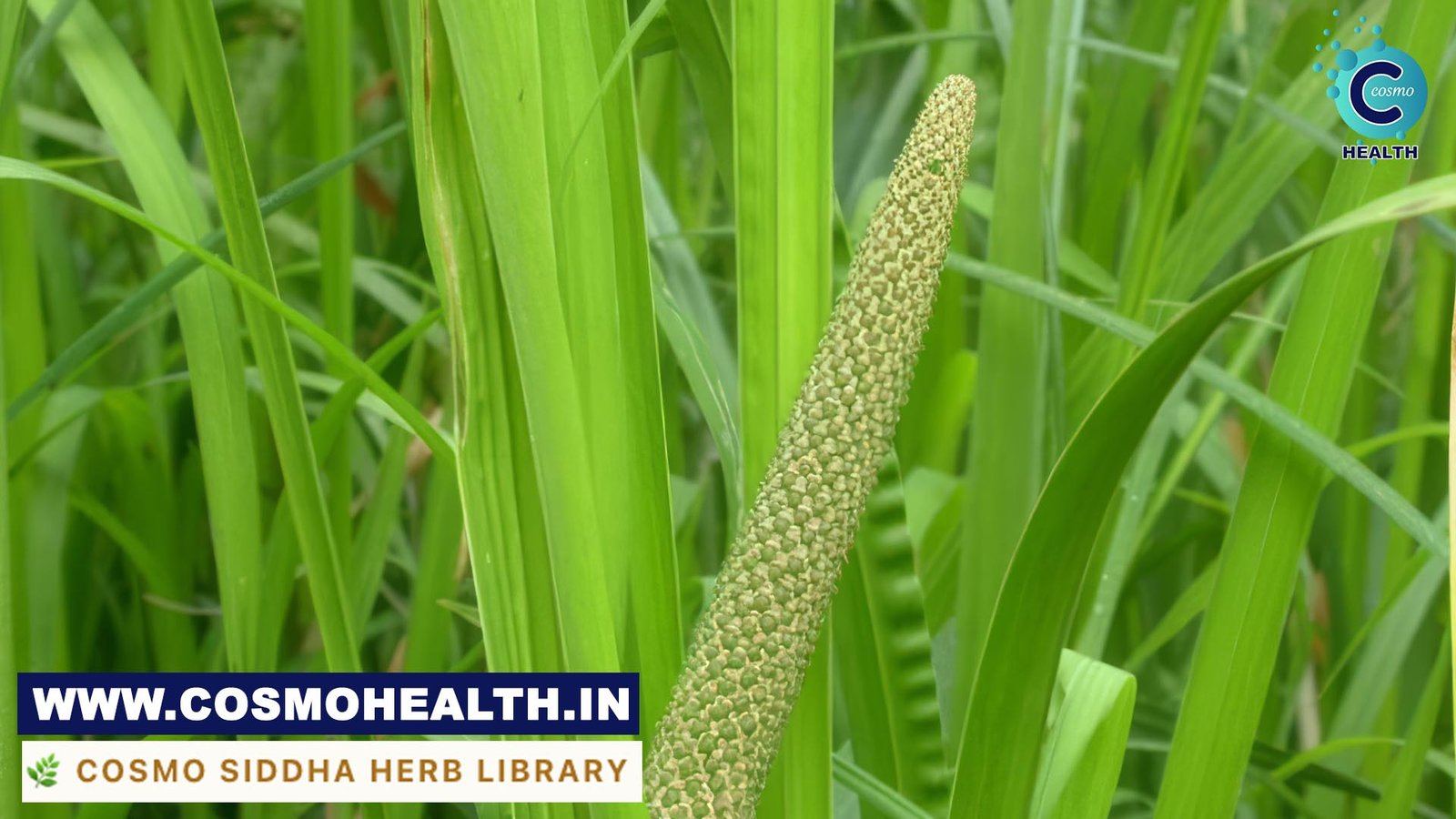
Acorus calamus, or Vasambu, is a revered Siddha herb known for its cognitive, digestive, and therapeutic properties.
🌿 COSMO SIDDHA HERB LIBRARY
Vasambu
The ancient herb for mind, voice, and vitality.
Vasambu, scientifically known as Acorus calamus, is a perennial marshy herb widely used in traditional Siddha medicine. Revered for its pungent taste and potent medicinal properties, it's often referred to as 'Vacha' or 'Sweet Flag'. Its rhizome is primarily utilized for a range of therapeutic applications.
Vasambu uses, Sweet Flag benefits, Acorus calamus for digestion
🌱 What is Vasambu?
Is this the herb you're looking for?
🌿 Vasambu
Sweet Flag (Acorus calamus)
How to identify Vasambu (Sweet Flag)
👁️ Appearance
Leaves: Long, sword-shaped, bright green, linear leaves emerging directly from the rhizome, resembling iris or grass. They are typically stiff and erect.
Stem: The true stem is a thick, aromatic, horizontal rhizome that creeps beneath the soil. It is fleshy, branched, and reddish-brown externally with a whitish interior, having a distinctive pungent smell. Above-ground 'stems' are actually leaf bases.
Fruit/Flower: Small, greenish-yellow flowers borne on a fleshy spike (spadix) within a leaf-like spathe. Fruits are rarely seen, typically small berries.
🌱 Where it Grows
Acorus calamus thrives in aquatic or semi-aquatic environments, preferring boggy and marshy conditions. Its adaptability allows it to be found across various continents.
- India (especially Southern states)
- Sri Lanka
- Southeast Asia
- Europe (parts of)
- North America (parts of)
⚠️ Do Not Confuse With
Vasambu can sometimes be confused with other wetland plants with similar leaf structures like Irises (Iris spp.) or Cattails (Typha spp.). However, its distinctively aromatic rhizome and the presence of a spadix inflorescence help differentiate it. The smell is a key identifier.
Vasambu in Siddha Medicine
Traditional Reference Traditional Reference 🟤
In Siddha, Vasambu is highly valued for its 'Vaatha' and 'Kapha' balancing properties. It is extensively used for improving cognitive function, aiding digestion, promoting speech development, and treating respiratory ailments. It's also used externally for skin conditions and insect repellent.
📖 Referenced Siddha Texts
Meaning: Vasambu removes Vaatham, Pitham, and Kabham. Vasambu is said to be a medicine for vomiting. Vasambu is also said to be a medicine for diarrhea. Vasambu removes diseases and itself becomes a medicine for diseases.
Associated Siddhar
Agathiyar
Siddhar Agathiyar, one of the foremost Siddhas, is often credited with compiling extensive knowledge on medicinal herbs and their therapeutic applications, including Vasambu, which finds prominence in many of his documented works like Agathiyar Gunavagadam.
Uses and Effects of Vasambu
🌿 Traditional Uses
Traditional Use 🟤- Digestive Aid: Used to stimulate appetite, relieve flatulence, indigestion, and abdominal pain. Its carminative properties help reduce gas.
- Cognitive Enhancer: Believed to improve memory, intellect, and speech. Often administered to children to aid in speech development.
- Respiratory Support: Effective in treating coughs, colds, asthma, and bronchitis due to its expectorant and decongestant qualities.
- Skin Disorders: Applied topically as a paste for various skin conditions like eczema, scabies, and fungal infections due to its antimicrobial properties.
- Insect Repellent: Powdered rhizome is used to repel insects like cockroaches, bed bugs, and moths, especially for preserving clothes and books.
- Anti-inflammatory: Used to reduce inflammation, especially in arthritis and joint pains when applied externally or taken internally in controlled doses.
- Anthelmintic: Traditionally used to expel intestinal worms.
🧬 Modern Research & Evidence
Research Evidence 🔵Contemporary scientific studies are exploring the pharmacological properties of Acorus calamus, validating some of its traditional uses while also highlighting important safety considerations.
- Neuroprotective & Cognitive Effects: Studies suggest that compounds in Acorus calamus, particularly alpha- and beta-asarone, may have neuroprotective, memory-enhancing, and anxiolytic effects, supporting its traditional use for brain health.
- Antimicrobial Activity: Research indicates its efficacy against various bacteria and fungi, validating its use in traditional medicine for infections and skin ailments.
- Anti-inflammatory & Antioxidant: Acorus calamus extracts have shown significant anti-inflammatory and antioxidant properties, suggesting potential in managing inflammatory conditions and oxidative stress.
- Insecticidal Properties: Modern research confirms the insecticidal and repellent properties of Acorus calamus, particularly its essential oil, against various pests.
⚠️ Safety & Warnings
Remember, 'natural' does not always mean 'safe'. Always use herbs responsibly.
Who should be careful when using Vasambu?
- Pregnant and Breastfeeding Women: Avoid use due to lack of sufficient safety data and potential abortifacient effects.
- Children: Administer with extreme caution and only under expert supervision due to dosage sensitivity.
- Individuals with Liver/Kidney Conditions: Consult a doctor before use, as high doses may affect these organs.
- Individuals on Sedatives: May interact with sedative medications due to its potential anxiolytic effects.
- Individuals with Heart Conditions: High doses may affect heart rhythm in some individuals.
- Long-term Internal Use: Generally not recommended for prolonged internal use without professional guidance due to beta-asarone content.
Possible Side Effects
Excessive or improper use of Vasambu can lead to nausea, vomiting, stomach upset, tremors, and in severe cases, neurological effects. Some varieties (triploid/tetraploid) contain higher levels of beta-asarone, which is considered potentially carcinogenic in very high doses. Always ensure to use diploid varieties and consult a Siddha physician for appropriate dosage and preparation.
🌿 Quick Summary
📚 Sources & References
- The Siddha Pharmacopoeia of India
- Traditional Tamil Siddha Texts (e.g., Agathiyar Gunavagadam)
- Journal of Ethnopharmacology
- Research articles on Acorus calamus phytochemistry and pharmacology
- Personal experience from Siddha clinical practice