


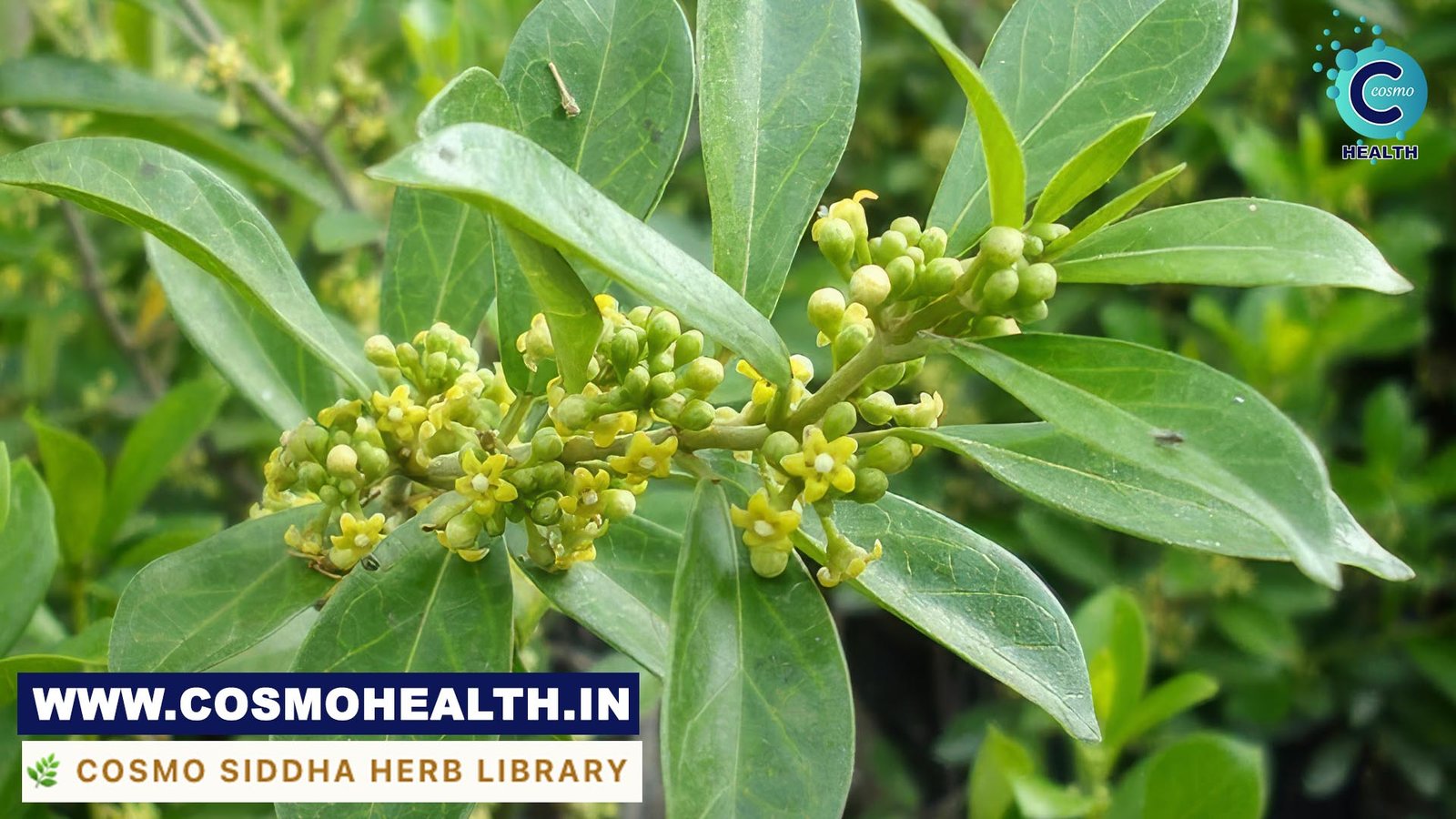
Sirukurinjan, Gymnema sylvestre, is a vital Siddha herb known as 'sugar destroyer' for its potent anti-diabetic properties.
🌿 COSMO SIDDHA HERB LIBRARY
Sirukurinjan
The ancient 'sugar destroyer' herb for metabolic wellness.
Sirukurinjan is a woody climbing plant native to the tropical forests of India, Africa, and Australia. Revered in Siddha medicine, its leaves are primarily used for their profound effects on sugar metabolism and overall health.
Tulasi, Neem, Amla, Keezhanelli
🌱 What is Sirukurinjan?
Is this the herb you are looking for?
🌿 Sirukurinjan
Gymnema, Gurmar, Periploca of the woods (Gymnema sylvestre)
How to Identify Sirukurinjan
👁️ Appearance
Leaves: Simple, ovate to elliptic leaves, 3-7 cm long, 2-5 cm wide, opposite, with a velvety texture on the underside and an acute apex. Margin entire.
Stem: Woody, slender, twining stem, often hairy when young, becoming glabrous with age. Produces milky latex when cut.
Fruit/Flower: Follicles, paired, slender, 5-10 cm long, tapering at both ends, containing flattened seeds with a coma (tuft of hairs).
🌱 Where Sirukurinjan Grows
Sirukurinjan is indigenous to the tropical and subtropical regions, flourishing in diverse ecosystems.
- Indian subcontinent (especially Southern India)
- Parts of Africa
- Tropical Australia
- Southeast Asia
⚠️ Do Not Confuse With
While distinctive, it can sometimes be confused with other climbers. Key identifying features are its unique leaves and the temporary sweet taste blocking effect when chewed, which is characteristic of Gymnema sylvestre.
Sirukurinjan in Siddha Medicine
Traditional Reference Traditional Reference 🟤
Sirukurinjan is a cornerstone herb in Siddha for managing 'Madhumeham' (diabetes). It is renowned for its ability to regulate blood sugar, improve digestion, and reduce inflammation. Its 'sugar-destroying' property is highly valued.
📖 Siddha Texts & References
Meaning: Sirukurinjan leaf is an excellent medicine For relieving Madhumeham (diabetes). It reduces body heat, stimulates appetite, An excellent companion for sugar disease.
Associated Siddhar
Agathiyar
Siddhar Agathiyar, a primordial Siddhar, extensively documented the medicinal properties of various herbs, including Sirukurinjan, in his comprehensive texts on Siddha medicine and pharmacology, highlighting its efficacy in metabolic disorders.
Uses and Effects of Sirukurinjan
🌿 Traditional Uses
Traditional Use 🟤- Diabetes Management (Madhumeham): Reduces blood sugar levels by enhancing insulin secretion, improving cellular glucose uptake, and reducing sugar absorption from the gut.
- Weight Management: Helps in weight loss by curbing sweet cravings and reducing calorie intake; also improves metabolism.
- Digestive Aid: Stimulates digestion, alleviates constipation, and supports overall gut health.
- Anti-inflammatory: Possesses anti-inflammatory properties, useful in conditions like arthritis and other inflammatory disorders.
- Liver Protection: Traditional use suggests hepatoprotective effects, supporting liver function.
- Cholesterol Regulation: May help in reducing LDL (bad) cholesterol and triglyceride levels.
🧬 Modern Research
Research Evidence 🔵Contemporary scientific studies are increasingly validating the traditional uses of Gymnema sylvestre, particularly its anti-diabetic and anti-obesity effects.
- Anti-diabetic Activity: Studies confirm gymnemic acids in Sirukurinjan reduce glucose absorption from the intestine and stimulate insulin secretion from pancreatic beta cells.
- Anti-obesity Effects: Research indicates that Gymnema sylvestre can help reduce body weight and fat mass, possibly by modulating lipid metabolism and reducing sweet cravings.
- Anti-inflammatory and Antioxidant Properties: Extracts have shown significant anti-inflammatory and antioxidant activities, supporting its use in various chronic conditions.
- Cholesterol Lowering: Animal and human studies have demonstrated its ability to lower serum cholesterol and triglyceride levels.
⚠️ Safety & Warnings
Remember, 'natural' does not always mean 'safe'. Herbal remedies can have potent effects and interact with medications.
Who Should Be Careful
- Diabetics on medication: May dangerously lower blood sugar. Monitor glucose levels closely.
- Pregnant and breastfeeding women: Insufficient research, best to avoid.
- Individuals undergoing surgery: Stop use at least two weeks prior due to potential blood sugar effects.
- People with known allergies to plants in the Apocynaceae family.
Possible Side Effects
Generally well-tolerated at recommended doses. Potential side effects include mild stomach upset, nausea, headache, dizziness, or diarrhea. Hypoglycemia (low blood sugar) is a significant risk, especially if combined with anti-diabetic drugs.
🌿 Quick Summary
📚 Sources
- The Siddha Pharmacopoeia of India
- Agathiyar Gunapadam (Siddha Materia Medica)
- Pharmacognosy and Phytochemistry Research Journals
- Traditional Knowledge Digital Library (TKDL)