


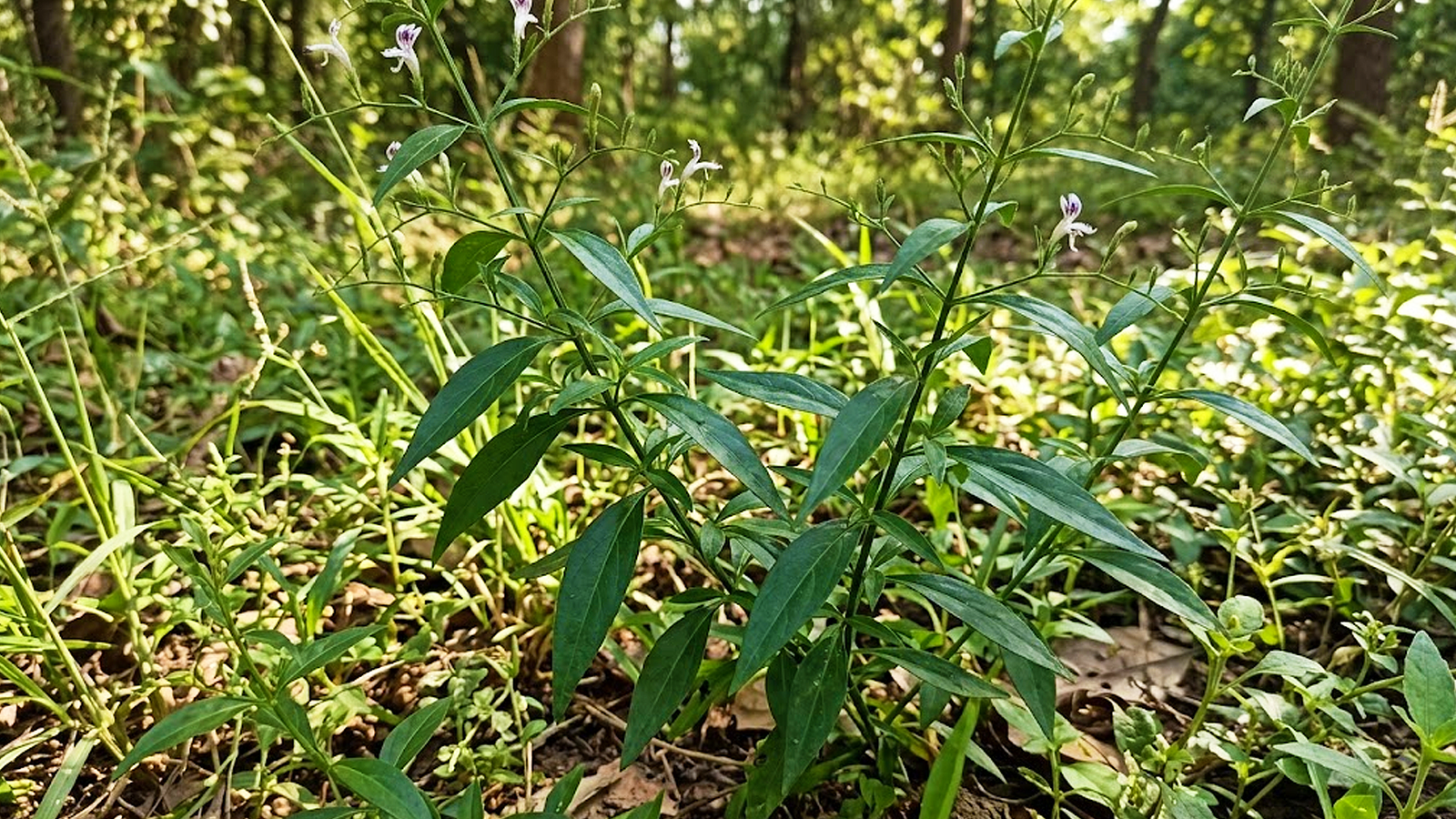
Nilavembu, the 'King of Bitters', is a powerful Siddha herb known for its fever-reducing and immune-boosting properties.
🌿 COSMO SIDDHA HERB LIBRARY
Nilavembu
The potent bitter herb, a cornerstone of Siddha fever remedies.
Nilavembu, scientifically known as Andrographis paniculata, is a highly revered herb in Siddha medicine. Often called the 'King of Bitters' due to its intensely bitter taste, it is widely recognized for its potent medicinal properties, particularly in combating various fevers, infections, and supporting overall immunity.
Kabasura Kudineer, Dengue fever, immunity
🌱 What is Nilavembu?
Verify this herb with an expert before use.
🌿 Nilavembu
Creat, King of Bitters, Green Chiretta (Andrographis paniculata)
How to identify Nilavembu
👁️ Appearance
Leaves: Lanceolate to ovate-lanceolate, dark green, opposite, glabrous, with acute apex and cuneate base, typically 5-8 cm long and 1-2.5 cm wide.
Stem: Slender, quadrangular (four-sided), much-branched, green, with prominent longitudinal furrows along the angles and swollen nodes.
Fruit/Flower: Capsule, linear-oblong, glabrous, approximately 1.5-2 cm long and 0.3 cm wide, containing numerous yellowish-brown, sub-quadrate seeds.
🌱 Where Nilavembu grows
Nilavembu is a common sight across various tropical and subtropical regions of Asia, thriving in diverse environments ranging from open fields to forest undergrowth.
- India (especially Southern India)
- Sri Lanka
- Southeast Asia (e.g., Thailand, Malaysia, Indonesia)
- China
- Pakistan
⚠️ Do not confuse with
While Nilavembu has a distinct appearance and intense bitterness, some might confuse it with other bitter herbs. Key identifiers are its distinct quadrangular stem, specific lanceolate leaf shape, and small, pale white to pink flowers with purple markings. Always verify with a qualified botanist or Siddha expert.
Nilavembu in Siddha Medicine
Traditional Reference Traditional Reference 🟤
Nilavembu is celebrated in Siddha for its potent antipyretic, anti-inflammatory, and immunomodulatory properties. It is a primary ingredient in formulations for various types of fevers (Suram), including viral fevers, and is highly valued for purifying the blood and supporting liver health.
📖 Key Siddha Texts referencing Nilavembu
Meaning: The bitter Nilavembu reduces fever, It provides strong support to immunity. A superior herb that lowers body heat, It is a great medicine that cures ailments.
Associated Siddhar
Agathiyar (Agastya)
Agathiyar, the revered patron of Siddha Medicine, is attributed with laying the foundational principles for understanding the therapeutic properties of countless herbs, including potent ones like Nilavembu. His comprehensive works indirectly guide the classification and application of such vital medicinal plants in Siddha practice.
Uses and Effects of Nilavembu
🌿 Traditional Siddha Uses
Traditional Use 🟤- Fevers (Suram): Highly effective against various types of fevers, including viral fevers like dengue, chikungunya, malaria, and general fever. It helps bring down body temperature and alleviates associated symptoms.
- Immunity Booster: Strengthens the body's natural defense mechanisms, making it more resilient against infections and promoting overall health.
- Anti-inflammatory: Reduces inflammation throughout the body, providing relief from pain, swelling, and other inflammatory conditions.
- Liver Support & Detoxification: Traditionally used to protect and support liver function, aiding in detoxification processes and improving bile flow.
- Blood Purifier (Ratha Suthi): Helps cleanse the blood, useful in conditions like skin disorders, chronic infections, and for general well-being.
- Digestive Aid: Its bitter taste stimulates digestive enzymes and improves appetite, while also helping to expel intestinal worms.
🧬 Modern Research & Evidence
Research Evidence 🔵Contemporary scientific studies have extensively investigated and validated many traditional uses of Nilavembu, exploring its diverse pharmacological properties.
- Antipyretic and Anti-inflammatory Activity: Numerous studies have confirmed that compounds like andrographolide in Andrographis paniculata possess significant antipyretic (fever-reducing) and anti-inflammatory activities, supporting its traditional use in various fevers and inflammatory conditions.
- Antiviral and Antimicrobial Effects: Research indicates its potential against various viruses (e.g., dengue, influenza) and bacteria, by inhibiting viral replication, disrupting bacterial growth, and boosting the host immune response.
- Immunomodulatory Effects: Modern research confirms Nilavembu's ability to modulate the immune system, enhancing both innate and adaptive immune responses, thereby strengthening the body's defense mechanisms against pathogens.
- Hepatoprotective Activity: Studies have shown that Nilavembu can protect liver cells from damage caused by toxins and infections, aligning with its traditional use for liver support.
⚠️ Safety & Warnings
Remember, natural does not always mean safe. Potent herbs like Nilavembu require careful and informed use under professional guidance.
Who should be careful?
- Pregnant and breastfeeding women should strictly avoid Nilavembu unless specifically advised and monitored by a qualified Siddha doctor.
- Individuals with autoimmune diseases or those on immunosuppressants should use with extreme caution and under medical supervision, as it can stimulate the immune system.
- May interact with blood-thinning medications (anticoagulants) and blood pressure medications; consult a doctor if on such medication.
- Overuse or prolonged use may cause gastric discomfort, nausea, or diarrhea due to its intense bitterness and potent action.
- Individuals with fertility issues should consult a specialist, as some studies suggest potential anti-fertility effects in very high doses.
Potential Side Effects
While generally safe in recommended dosages, some individuals may experience mild gastric upset, nausea, vomiting, or allergic reactions (rash, itching). Prolonged use or high doses can lead to appetite loss, heartburn, or diarrhea. Discontinue use if adverse reactions occur and consult a physician immediately.
🌿 Quick Summary
📚 Sources
- Siddha Pharmacopoeia of India (SPI)
- Traditional Siddha texts (e.g., Agathiyar Gunapadam)
- Pharmacognosy of Herbal Drugs by C.P. Khare
- Research papers on Andrographis paniculata from PubMed, ScienceDirect, and Google Scholar