


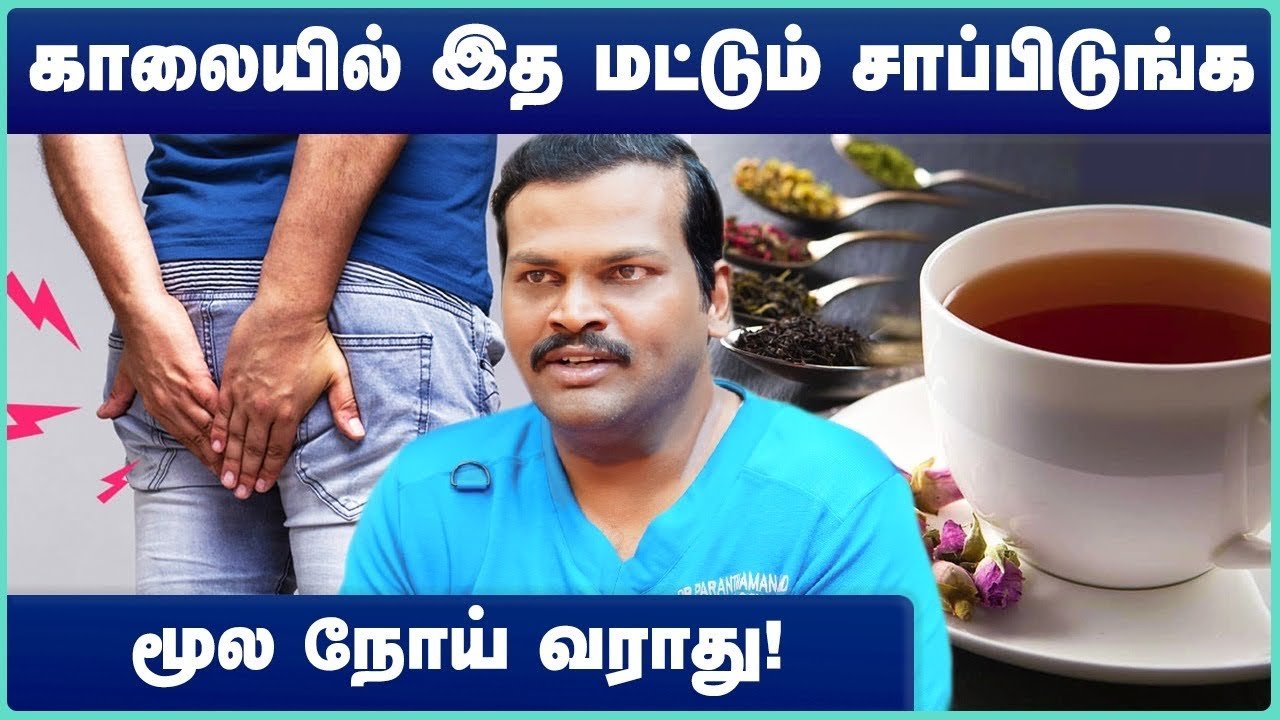
Discover Ayurveda's ancient secrets to permanently conquer piles, often without surgery, by transforming your gut health and li...
Greetings, seekers of wellness, and welcome to a profound exploration into a condition that silently afflicts countless lives: piles, or hemorrhoids. Today, we embark on an illuminating journey with Dr. Paranthaman from VK Medical Center, Arumbakkam, a beacon of Ayurvedic wisdom, to unravel the mysteries of this often-debilitating ailment. Many grapple with the relentless discomfort, fearing recurrence even after conventional surgical interventions. But what if there was a path to lasting relief, rooted in ancient knowledge?
The Genesis of Suffering: Understanding Piles Through an Ayurvedic Lens
Dr. Paranthaman begins by dispelling a common misconception: piles do not simply appear overnight. Their insidious development is a gradual process, deeply intertwined with our daily habits, especially our dietary choices and lifestyle rhythms. In our modern world, where food culture, work demands, and sleep patterns have drastically transformed, our digestive systems bear the brunt.
The journey to piles often commences with improper digestion. When food isn't metabolized efficiently, Ayurveda identifies a state known as ‘Ama’ – a toxic, sticky residue resulting from undigested food, akin to a sluggish, heavy feeling in the gut. This ‘Ama’ then leads to gas accumulation, disrupting the delicate balance of our internal digestive 'fire,' or ‘Pitta’.
Imagine ‘Pitta’ as the internal flame that cooks our food, transforming it into nourishing essence. If this fire is weak or erratic, food remains uncooked, leading to bloating and discomfort. This bloating, in turn, severely disturbs ‘Apana Vayu,’ the vital downward-moving energy responsible for elimination. When ‘Apana Vayu’ is compromised, waste products don't move smoothly. Instead, like sediment at the bottom of a neglected pot, undigested, sticky food particles accumulate in the intestines, ultimately culminating in chronic constipation.
The profound wisdom here is simple yet critical: constipation is not just a symptom; it's often the root cause, the initial alarm bell that, if heeded, can prevent the cascade into more severe conditions like piles, fissures, and other complex complications. Addressing constipation promptly is the first, most crucial step towards a healthier future.
The Silent Progression: How Lifestyle Fuels the Fire
How long does it take for persistent constipation to evolve into full-blown piles? The answer, surprisingly, can range from a mere week to months, or even years. Many individuals visit clinics having suffered for five years or more, completely unaware that their discomfort stems from piles. The culprit? Often, it's seemingly innocuous daily habits.
Consider the common practice of spending extended periods – 10 to 15 minutes or more – in the toilet. In today’s smartphone era, the restroom has inadvertently become a reading nook or a digital escape. This prolonged sitting, coupled with the increased prevalence of Western-style toilets, creates an environment ripe for trouble. Unlike squat toilets which encourage a more natural, efficient posture for elimination, Western commodes can lead to excessive straining and pressure on the delicate rectal mucosa.
Dr. Paranthaman emphatically warns against turning the toilet into a resting or entertainment zone. The constant pressure and straining over time can cause the mucous membrane of the rectum to prolapse, paving the way for piles. It’s a stark contrast to yesteryears when a quick read of the newspaper was the extent of bathroom leisure, leading to prompt evacuation.
To mitigate these risks, Ayurveda champions mindful eating: consume food properly and on time, avoiding the "Hurry, Worry, Curry" mentality – don't eat in a rush, don't eat when stressed, and avoid overly spicy or heavy foods. Proper digestion ensures smooth bowel movements, preventing the initial onset of constipation.
Ayurveda's Surgical Brilliance: The Ksharakarma Advantage
For many, the mention of 'surgery' and 'Ayurveda' in the same breath seems incongruous. Yet, Dr. Paranthaman highlights a crucial, often overlooked fact: Sushruta, the ancient Indian physician, is revered as the 'Father of Surgery.' Ayurveda boasts a sophisticated surgical heritage, and its modern applications, particularly for conditions like piles, are nothing short of revolutionary.
Today, accessible and effective treatments for piles are widely practiced, even at national institute levels. One such procedure is 'Ksharakarma' – a simple, day-care treatment. This involves the precise application of specialized alkaline medicine (Kshara) to the inflamed pile mass. Conducted under local anesthesia, the procedure typically lasts only an hour or two, allowing patients to resume their normal lives the very next day. This Ayurvedic approach significantly reduces the trauma and prolonged recovery often associated with conventional surgery.
Perhaps the most compelling aspect of Ksharakarma is its remarkably low recurrence rate. Why such lasting efficacy? Because Ayurveda doesn't merely treat the symptom; it addresses the root cause. Dr. Paranthaman explains that alongside the procedure, patients undergo comprehensive lifestyle and dietary modifications. A personalized roadmap is created, targeting the fundamental imbalances that led to the condition. While complete immunity from recurrence cannot be absolutely guaranteed (as our bodies naturally age and illnesses manifest), adherence to these principles significantly minimizes the chances. This 5,000-year-old tradition emphasizes that early intervention, combined with holistic care, offers the most profound and enduring cures.
Medicinal Pathways to Healing
Beyond surgical interventions, Ayurveda offers a rich pharmacopoeia of herbal remedies. For those seeking treatment in the initial stages, basic tablet formulations like Triphala, Kanchanara Guggulu, and Abhayarishta (a potent but gentle laxative) are commonly prescribed. However, it's vital to understand that Ayurvedic treatment is highly personalized. The specific medication and dosage depend on an individual's 'Prakriti' (unique constitution) and the stage or degree of piles (First or Second Degree).
Dr. Paranthaman cautions against self-diagnosis and self-medication. While these are common Ayurvedic remedies, they must be prescribed by a qualified practitioner who can accurately assess your symptoms and 'Prakriti' to ensure the most effective and safe treatment plan. Trusting an expert ensures precision in healing.
Decoding the Symptoms: Internal vs. External Piles
Piles manifest in different forms, and understanding these distinctions is key to early detection. There are primarily two types:
- Internal Piles: These occur above the 'dentate line' – the border within the anal canal, invisible to the naked eye. Often, there's no pain. The tell-tale sign is bleeding – drops of blood in the toilet or even the entire toilet bowl appearing bloody after a bowel movement.
- External Piles: These are visible, fleshy protrusions outside the anus, typically found at positions analogous to 3, 7, or 11 o'clock on a clock face. Initially, these masses might retract after a bowel movement, but prolonged neglect can lead to 'prolapse,' where they permanently remain outside, reaching a more advanced, 'third stage.' Like internal piles, external ones usually don't cause pain unless there's excessive straining, particularly in older individuals experiencing a 'Vata' imbalance.
The Unspoken Taboo: Why Rectal Examination is Essential
Dr. Paranthaman touches upon a sensitive yet critical topic: the widespread reluctance to undergo rectal examinations. Due to the private nature of the area, many feel shy or embarrassed. However, this hesitation can have severe consequences. Neglecting seemingly minor clinical symptoms can allow serious conditions, even cancer, to progress undetected.
It's imperative to shed this inhibition. A basic 'Proctoscopy' is a fundamental diagnostic tool for anal examination. While you can see externally, a proctoscope allows a doctor to examine up to 4 cm inside the rectum, providing crucial insights into the extent of the problem. This, coupled with a 'Per Rectum Examination' (PR Exam), often provides sufficient information for a differential diagnosis. For deeper issues, a 'Colonoscopy' may be recommended.
Patients often self-diagnose "piles," but an examination might reveal fissures or other issues. The belief that one must simply endure such conditions, compounded by a reluctance to discuss them, is a grave error. The rectum is as much a part of the body as any other; it deserves attention and care. Early diagnosis prevents future complications and allows for timely, effective treatment.
Historically, regular practices like gut cleansing (Enema) every three months and oil baths were common, and major rectal ailments were rare. Today, these practices have waned. Therefore, a clinical examination, especially proctoscopy, is essential to accurately determine the degree of piles or fissure, or to identify any other underlying issues that the patient might not even be aware of.
Who Needs an Examination?
While not everyone needs a routine rectal examination, it is strongly recommended for anyone experiencing digestive problems, loss of appetite, or infrequent bowel movements (e.g., only once every two days). Early assessment helps identify the root cause of these issues, often preventing the need for surgical intervention. By understanding what dietary and lifestyle modifications are needed, individuals can often heal without extensive procedures.
The Healing Timeline: Ayurvedic Treatment Duration
The duration of Ayurvedic treatment for piles varies based on the stage of the condition:
- Initial Stages: A two-week course of herbal medicines, coupled with strict dietary and lifestyle changes, can often bring significant relief. Regular 'Sitz baths' – sitting in warm water infused with medicated powders for 2-5 minutes – can also effectively reduce inflammation and shrink hemorrhoids in their early phase, potentially negating the need for Ksharakarma.
- Advanced Stages: If initial medical management proves insufficient, or if the piles are more advanced, the simple surgical procedure of Ksharakarma may be employed. As discussed, this typically takes 20-30 minutes, with the patient resuming normal activities within an hour.
The Overlooked Silent Sufferers: Constipation in Children
Historically, constipation and piles were considered ailments of the elderly. However, Dr. Paranthaman highlights a disturbing modern trend: these conditions are now increasingly observed in children, some as young as two to five years old. The primary culprit? Our contemporary junk food culture. Diets dominated by pizza, burgers, buns, biscuits, and refined flour (Maida) lack essential fiber. This deficiency hinders 'peristaltic movement' – the natural muscular contractions that propel waste through the intestines.
Children develop preferences for single-pattern diets, like daily instant noodles or specific chocolates and processed breads, eschewing fruits and vegetables. The solution is simple yet profound: encourage a diverse diet rich in fruits, vegetables, and fiber. Emphasize adequate water intake and regular sleep patterns. These foundational habits are crucial in preventing constipation and, consequently, piles in children.
The Unsung Hero: Hydration's Role in Digestive Health
A seemingly basic, yet often neglected, aspect of digestive health is water intake. Dr. Paranthaman stresses that most individuals fall short of the recommended 3-5 liters of water daily. Proper hydration is paramount, but timing is equally crucial.
Drinking excessive water immediately after meals can dilute digestive juices, impairing the 'Pitta' fire. Ayurveda advises drinking water at least half an hour before meals and half an hour after. Throughout the day, consistent hydration ensures that food is properly digested, and waste products are adequately hydrated for smooth elimination. Water helps flush toxins and prevents the stool from becoming hard and dry, a common cause of constipation.
Beyond Constipation: The Peril of Frequent Bowel Movements
While we often focus on the problem of infrequent bowel movements (less than once a day), Dr. Paranthaman points out another critical, yet often ignored, issue: excessively frequent bowel movements. It's normal to go once, or perhaps twice, daily. However, if one experiences urges immediately after eating, or after consuming tea/coffee (a pattern often observed in smokers), or if there's a need to go four or more times a day, this is a red flag.
These symptoms can indicate 'Irritable Bowel Syndrome' (IBS) or underlying irritation and inflammation in the gut, possibly even ulcers. Such conditions warrant immediate medical attention. Diagnostic procedures like colonoscopy or proctoscopy can identify the presence of ulcers, which, if treated early with proper Ayurvedic interventions, can heal effectively. Neglecting these signals can lead to severe complications like Crohn's disease or, in grave instances, even cancer.
Therefore, both constipation and overly frequent bowel movements are issues that demand attention and professional consultation. Dr. Paranthaman concludes by reiterating the efficacy of Ayurveda in providing permanent relief for piles, offering a clear, holistic path to wellness. Thank you.