


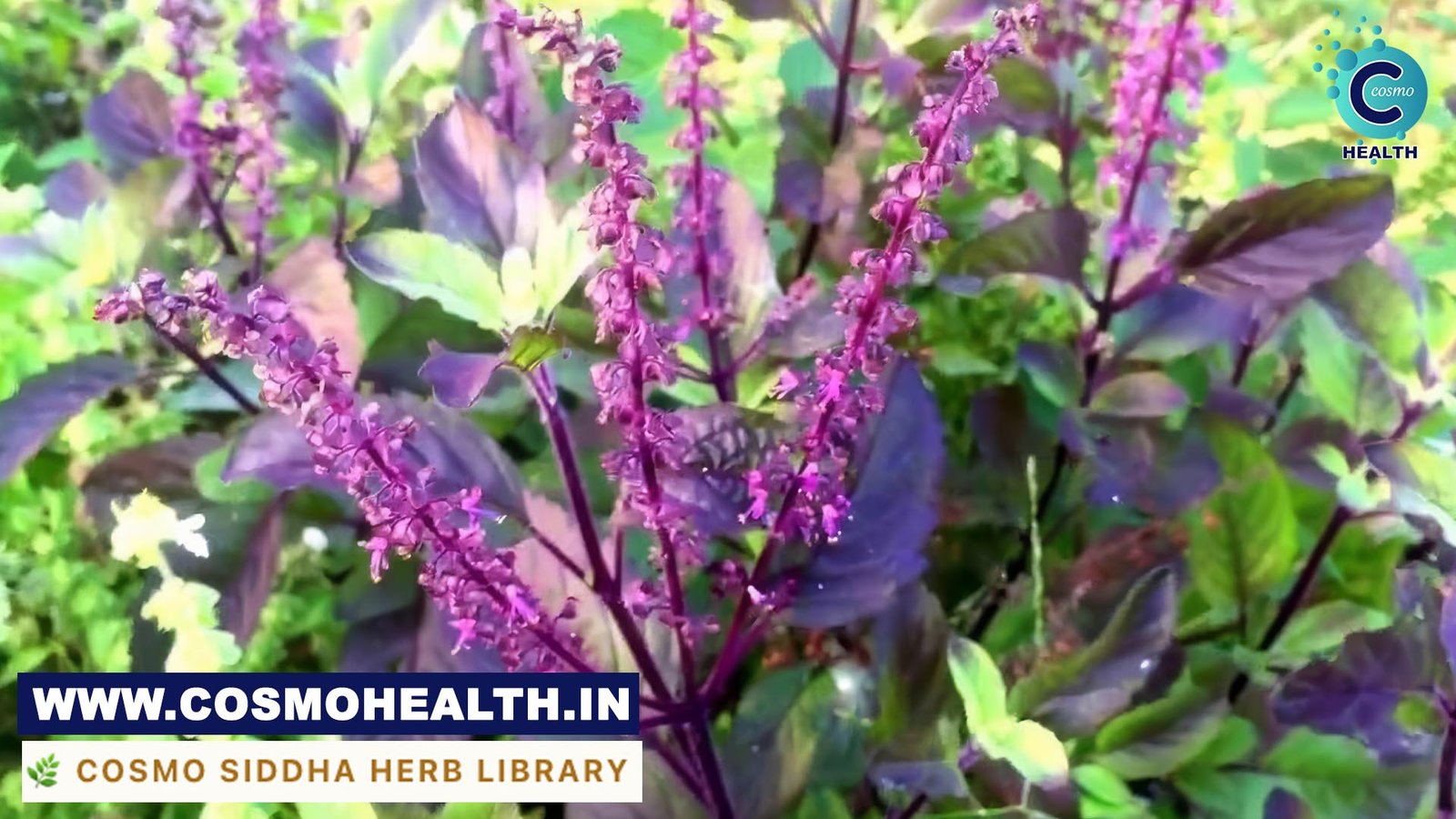
Karunthulasi, or Black Holy Basil, is a powerful adaptogenic herb known for its deep purple leaves and potent healing virtues.
🌿 COSMO SIDDHA HERB LIBRARY
Karunthulasi
The potent, dark-leafed variant of Holy Basil, revered for its robust medicinal properties.
Karunthulasi, also known as Black Holy Basil, is a significant herb in Siddha and Ayurvedic medicine. Distinct from green Tulasi by its dark purple to black leaves, it is highly valued for its stronger medicinal properties, particularly in respiratory and immune support.
Nilavembu, Thulasi, Adathodai
🌱 What is Karunthulasi?
Verify the identity of Karunthulasi with a qualified Siddha expert.
🌿 Karunthulasi
Black Holy Basil, Dark Holy Basil (Ocimum tenuiflorum 'Nigrum')
How to Identify Karunthulasi
👁️ Distinctive Appearance
Leaves: Leaves are deep purple to almost black, elliptical, toothed margins, and emit a strong aromatic fragrance when crushed. They are generally smaller and darker than common green Tulasi.
Stem: Stem is purplish-brown, square, branched, and slightly hairy.
Fruit/Flower: Small, purplish-black nutlets enclosed in persistent calyces, containing tiny dark seeds.
🌱 Where Karunthulasi Grows
Karunthulasi is widely cultivated across India and Southeast Asia, particularly valued in traditional healing systems and spiritual practices.
- India
- Sri Lanka
- Nepal
- Thailand
- Malaysia
⚠️ Do Not Confuse With
Often confused with other varieties of Tulasi (Ocimum tenuiflorum/sanctum) like Rama Tulasi (green leaves) or Vana Tulasi (wild Tulasi). Karunthulasi's distinct feature is its deeply pigmented, almost black leaves and generally stronger aroma and taste.
Karunthulasi in Siddha Medicine
Traditional Reference Traditional Reference 🟤
In Siddha, Karunthulasi is revered as a powerful 'rasayana' (rejuvenator) and 'kayakarpam' (longevity enhancer). It is extensively used to balance Vata and Kapha doshas, particularly beneficial for respiratory ailments, fever, skin conditions, and enhancing immunity.
📖 Siddha Texts Referencing Karunthulasi
Meaning: Black Holy Basil leaves destroy microbes, Relieve cough, cold, and body pain. It boosts immunity, And is a wondrous herb that prolongs life.
Associated Siddhar
Agathiyar
Agathiyar is one of the foremost Siddhas, considered the father of Siddha Medicine. His extensive knowledge encompasses herbal remedies, yoga, and alchemy. He emphasized the use of powerful herbs like Tulasi for holistic well-being and longevity.
Uses and Therapeutic Effects
🌿 Traditional Siddha Uses
Traditional Use 🟤- Respiratory Health: Used for cough, cold, bronchitis, asthma, and other respiratory infections. Its expectorant and anti-inflammatory properties help clear airways.
- Fever Management: Antipyretic properties help reduce fever, especially those associated with common colds and flu.
- Immune Booster: Enhances the body's natural defense mechanisms, protecting against various infections and illnesses.
- Skin Disorders: Applied externally for skin infections, itching, and insect bites due to its antiseptic properties.
- Digestive Aid: Helps in digestion, reduces bloating, and can alleviate stomach discomfort.
- Stress and Adaptogen: As an adaptogen, it helps the body cope with stress and promotes overall well-being.
🧬 Modern Research & Validation
Research Evidence 🔵Contemporary scientific studies have begun to validate many of the traditional uses of Ocimum tenuiflorum (including its 'Nigrum' variety), highlighting its wide range of pharmacological activities.
- Antimicrobial Activity: Studies confirm its broad-spectrum antibacterial, antiviral, and antifungal properties, supporting its traditional use against infections.
- Anti-inflammatory Effects: Research indicates compounds in Karunthulasi possess significant anti-inflammatory actions, beneficial for respiratory and other inflammatory conditions.
- Immunomodulatory Effects: Modern science shows it can modulate the immune system, enhancing both humoral and cell-mediated immunity.
- Antioxidant Properties: Rich in phenolic compounds and flavonoids, it exhibits strong antioxidant activity, protecting cells from oxidative damage.
- Adaptogenic Properties: Pharmacological studies support its adaptogenic nature, helping to normalize physiological processes and reduce stress.
⚠️ Safety & Warnings
While Karunthulasi is natural, it is potent and should be used with caution and under expert guidance.
Who Should Be Careful?
- Pregnant and breastfeeding women should avoid use or consult a physician.
- Individuals on anticoagulant medications due to potential blood-thinning effects.
- People with diabetes, as it may lower blood sugar levels.
- Individuals undergoing surgery should discontinue use two weeks prior.
Potential Side Effects
Generally well-tolerated, but high doses may cause mild gastrointestinal upset, nausea, or dizziness in some individuals. Allergic reactions are rare but possible.
🌿 Quick Summary
📚 References & Further Reading
- Siddha Vaidya Tirattu
- The Siddha Pharmacopoeia of India
- Journal of Ethnopharmacology studies on Ocimum tenuiflorum
- Traditional Indian Medicine: A Comprehensive Guide