


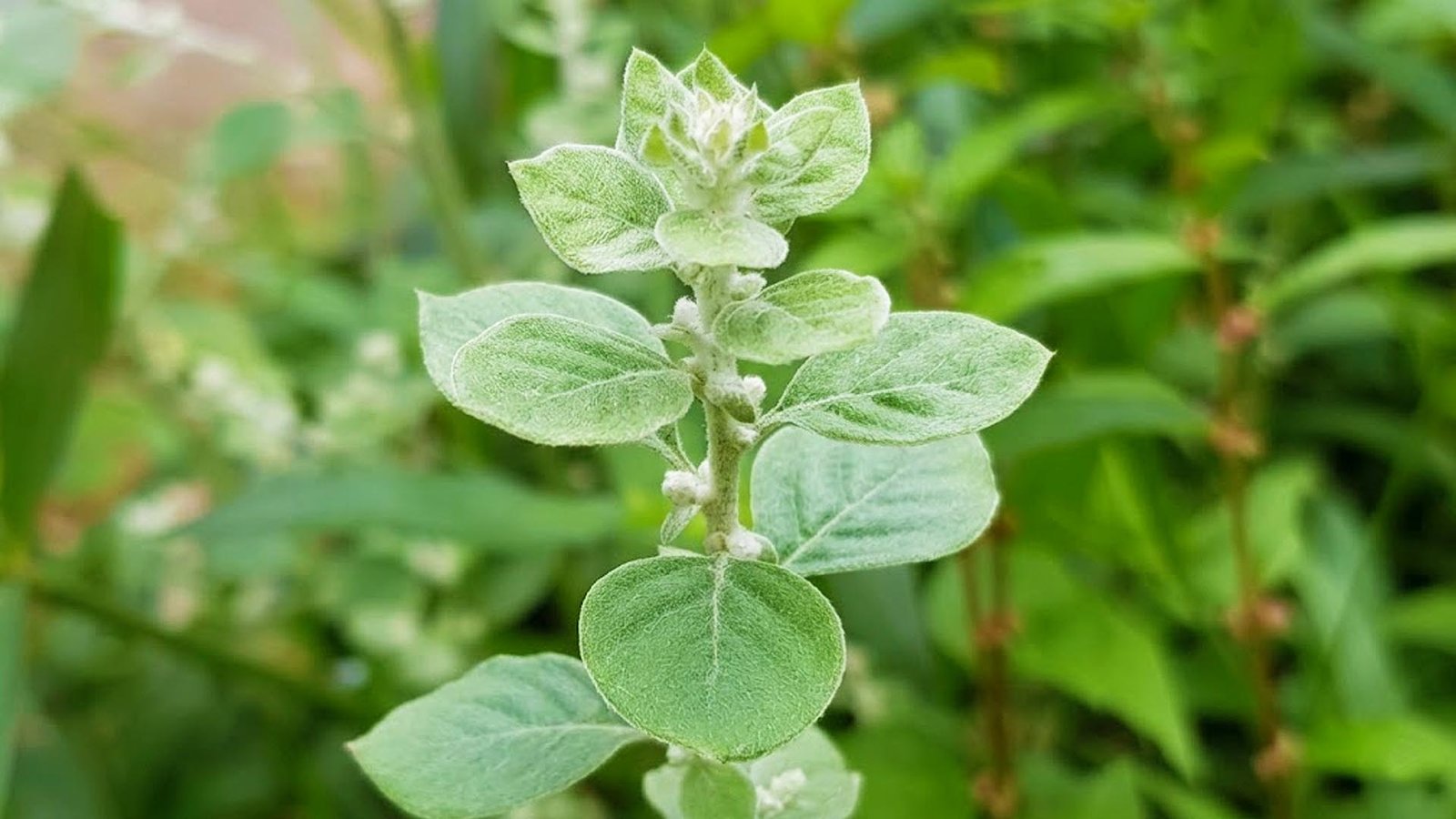
A traditional Siddha herb renowned for its potent diuretic and lithotriptic properties, ideal for kidney and urinary tract health.
🌿 COSMO SIDDHA HERB LIBRARY
Sirupeelai
The gentle diuretic and lithotriptic for renal health.
Sirupeelai, also known as Mountain Knotgrass, is a prominent herb in Siddha medicine. Revered for its diuretic, anti-inflammatory, and lithotriptic actions, it's widely used for various urinary tract and renal conditions.
🌱 What is Sirupeelai?
Verify the identity of Sirupeelai (Aerva lanata) with our detailed botanical guide and visual aids.
🌿 Sirupeelai
Mountain Knotgrass, Polpala (Aerva lanata (L.) Juss. ex Schult.)
How to Identify Sirupeelai
👁️ Appearance
Leaves: Leaves are alternate, simple, broadly elliptic to orbicular, often covered with whitish woolly hairs, especially on the underside. Margins are entire, sometimes slightly wavy.
Stem: Stems are herbaceous, much branched, often prostrate or ascending, covered with soft, white woolly hairs, especially when young. Can be green or reddish-tinged.
Fruit/Flower: Fruits are small, ovoid capsules, enclosed within the persistent sepals, containing tiny, black, glossy seeds.
🌱 Where Sirupeelai Grows
Sirupeelai is a common weed and a hardy plant, found widely across various geographical regions, thriving in disturbed and open areas.
- India (especially Southern India)
- Sri Lanka
- Tropical Africa
- Southeast Asia
- Australia
⚠️ Do Not Confuse With
While similar in general appearance to some other weeds, its characteristic woolly leaves and small, spiky white flowers clustered in axillary spikes help distinguish it. *Achyranthes aspera* (Nayuruvi) shares some habitat, but its inflorescence and leaf shape are distinctly different.
Sirupeelai in Siddha Medicine
Traditional Reference Traditional Reference 🟤
Sirupeelai is a cornerstone herb in Siddha for addressing *Neerkattai* (urinary calculus), *Neerchurukku* (dysuria), *Neerpeenaam* (urinary infections), and general kidney ailments. It helps balance *Pitham* and *Kabam* doshas.
📖 References in Siddha Texts
Meaning: Sirupeelai quickly relieves urinary obstruction; it breaks down urinary stones; removes excessive water retention; and cures Pitta disorders!
Associated Siddhar
Agathiyar
Agathiyar is one of the foremost Siddhas, whose extensive works in medicine, alchemy, and yoga form the bedrock of Siddha tradition. His teachings often highlight common herbs like Sirupeelai for their profound therapeutic properties and specific indications.
Uses and Therapeutic Effects
🌿 Traditional Siddha Uses
Traditional Use 🟤- Diuretic (சிறுநீர் பெருக்கி): Increases urine flow, helping to flush out toxins, excess fluids, and metabolic wastes from the body.
- Lithotriptic (கற்கரைப்பான்): Helps in dissolving and expelling urinary calculi (kidney stones, bladder stones, urethral stones).
- Anti-inflammatory (அழற்சி நீக்கி): Reduces inflammation, particularly in the urinary tract, alleviating symptoms like pain and burning sensation.
- Antimicrobial (கிருமி நாசினி): Combats urinary tract infections by inhibiting microbial growth, providing relief from recurrent UTIs.
- Coolant (உடல் குளிர்ச்சி): Possesses cooling properties that help soothe burning sensation during urination and reduce overall body heat related to Pitta imbalance.
- Wound Healing (காயம்பற்றுதல்): Used externally as a poultice or paste for treating wounds, boils, and skin infections in some traditions.
🧬 Modern Research & Evidence
Research Evidence 🔵Contemporary research supports many traditional claims regarding Sirupeelai's pharmacological activities, exploring its potential through scientific methodologies.
- Diuretic Activity: Pre-clinical studies and some clinical observations have confirmed the significant diuretic effect of Aerva lanata extracts, supporting its traditional use in managing fluid retention and oedema.
- Anti-urolithiatic Activity: Research demonstrates that compounds in Sirupeelai can inhibit the formation of calcium oxalate crystals and promote their dissolution and expulsion, validating its role in kidney stone management and prevention.
- Antimicrobial Properties: In vitro studies have shown its efficacy against various pathogenic bacteria, including those commonly responsible for urinary tract infections, suggesting its potential as a natural antibiotic.
- Anti-inflammatory & Analgesic Effects: Pre-clinical studies indicate its potential to reduce inflammation and pain, particularly in conditions affecting the urinary system, further supporting its use in dysuria and renal colic.
⚠️ Safety & Warnings
Remember, 'natural' does not always mean 'safe'. Medicinal herbs can have potent effects, interactions with medications, and contraindications. Professional guidance is essential.
Who Should Be Cautious?
- Pregnant and breastfeeding women (due to lack of sufficient safety data, use is generally advised against).
- Individuals with severe kidney diseases, heart conditions, or electrolyte imbalances, unless advised and monitored by a qualified specialist.
- People on diuretic medication or blood thinners (potential interactions that may alter drug efficacy or safety).
- Those with known allergies to plants in the Amaranthaceae family.
- Children and infants (consult a paediatric specialist before use).
Potential Side Effects
Sirupeelai is generally considered safe when used appropriately and within recommended dosages under expert guidance. High doses might lead to excessive urination and potential electrolyte imbalance due to its strong diuretic action. Mild gastrointestinal discomfort such as nausea or stomach upset has been reported in rare cases. Discontinue use and consult a physician if any adverse reactions occur.
🌿 Quick Summary of Sirupeelai
📚 References & Sources
- The Siddha Pharmacopoeia of India, Part I, Vol. I
- Agathiyar Gunapadam (Moolaigalum Vargamum)
- Journal of Ethnopharmacology - Research articles on Aerva lanata
- International Journal of Pharmaceutical Sciences and Research
- Traditional Knowledge Digital Library (TKDL)