



Company


Contact Us
+91 8448 179 777
contact@cosmohealth.in
Chennai, India
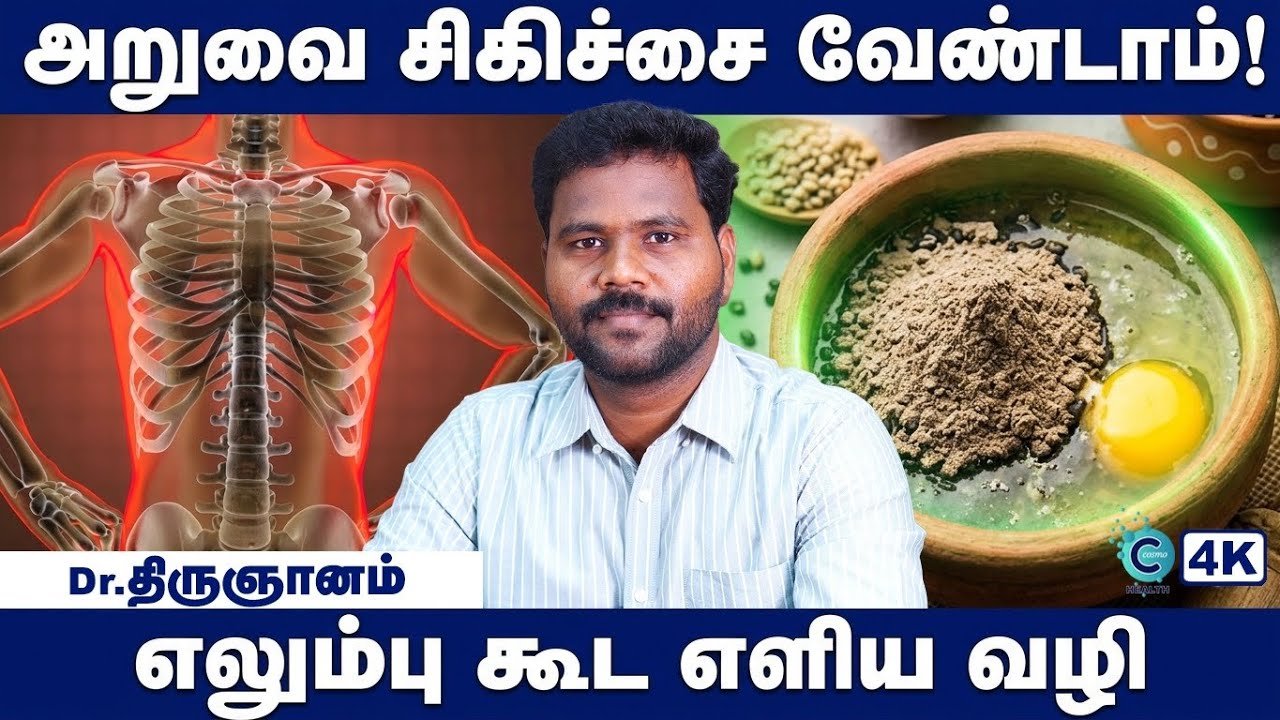
Fractured bones always heal; the real challenge is *how*—discover Siddha's time-tested secrets for robust recovery, defying age!
In the intricate dance of life, an unexpected fall or a sudden impact can leave us vulnerable, particularly as we gracefully age. The immediate aftermath of a bone fracture can be a daunting experience, filled with pain, fear, and uncertainty about recovery. While modern medicine offers remarkable advancements in surgical interventions and orthopedic care, there exists a profound, time-honored wisdom, often overlooked, that promises not just healing, but a holistic return to strength and mobility. Dr. Thirugnanam, a revered expert in Siddha medicine and Varma art, sheds light on this ancient approach, revealing that the fundamental truth remains: a fractured bone, regardless of age, possesses an inherent ability to mend itself. The true art lies in guiding this natural process effectively and without complications.
Imagine our prehistoric ancestors, constantly navigating treacherous landscapes, hunting for survival. Falls and injuries were not just common; they were an integral part of daily existence. Dr. Thirugnanam eloquently posits that perhaps the very first medical knowledge humans ever developed stemmed from observing and managing fractures. A hunter might fall, break a limb, and through instinct and observation, discover that with rest and proper positioning, the bone would eventually heal. This raw, empirical understanding laid the foundation for sophisticated traditional healing systems, where local 'bone setters' (kattu kattra vaithiyar) became indispensable members of communities, possessing an unparalleled, hands-on knowledge of orthopedic care.
Over centuries, this indigenous knowledge, rooted in understanding the body's innate healing capacities, flourished. However, as medical science evolved, becoming increasingly complex and expensive, the simpler, often more accessible traditional methods began to wane. Today, the management of fractures can feel overwhelmingly complicated and financially burdensome, leading many to feel adrift in their healing journey. While modern orthopedics plays a crucial role, especially in severe cases, Dr. Thirugnanam emphasizes that for certain types of fractures, a return to the fundamentals of traditional Siddha care can offer a powerful, complementary path.
As we journey through life, our bones undergo natural changes. For many seniors, especially those over 40, a significant concern is reduced bone density, often leading to conditions like osteoporosis. This makes them alarmingly susceptible to fractures from seemingly minor incidents. A simple misstep while getting out of bed, leaning on a chair to stand, or a slip in the bathroom can lead to debilitating injuries. Dr. Thirugnanam highlights common fractures in the elderly, such as 'wedge fractures' in the spine (affecting vertebrae like L4/L5), often resulting from a seated fall, and 'intracapsular hip fractures' where the femur head breaks due to the sheer force of muscle contraction upon impact.
The challenges for elderly patients extend beyond the initial injury. Surgical interventions, while life-saving for some, come with heightened risks and complications for those over 70 or 80. The body's ability to recover from major surgery can be compromised, making post-operative care and rehabilitation a formidable task. This reality underscores the urgent need for effective, less invasive alternatives, or at least complementary therapies, that can support the body's natural healing in a gentle yet powerful way.
The key to effective fracture management lies in a nuanced understanding of the injury itself. Not all fractures demand the same intervention. For instance, a subtle 'hairline crack' or a 'non-displaced fracture'—where the bone is broken but still in its correct anatomical position—can often be managed effectively with proper rest and traditional care, even at home. These are the situations where Siddha medicine truly shines, offering time-tested remedies to accelerate natural healing. However, Dr. Thirugnanam is quick to advise collaboration with modern orthopedics for more severe cases. If a bone is 'displaced,' meaning it has completely shifted from its original position, surgical intervention is almost always necessary to realign the fragments and ensure proper fusion.
The position of the fractured bone is paramount. If it's correctly aligned, the body can work its magic; if misaligned, complications are inevitable. The age-old practice of splinting or casting, still used today, fundamentally aims to maintain this correct alignment, allowing the healing process to unfold undisturbed. While elderly individuals are often advised to walk with caution and support, accidental falls, driven by fear or instability, can lead to severe impacts, causing displaced fractures that necessitate surgical intervention. Therefore, a careful diagnosis by a qualified medical professional is always the first crucial step in any fracture management plan.
Once the nature of the fracture is understood, particularly for less complicated cases or as a complementary therapy post-surgery, Siddha medicine offers a rich array of treatments. Internally, Siddha physicians prescribe powerful formulations such as Pirandai (Adamant Creeper) and Sanghu Parpam (a calcined conch shell preparation), both renowned for their bone-strengthening properties. These natural calcium supplements support the skeletal system, providing the necessary building blocks for repair. However, it is Siddha's external applications, known as 'Pattu' (poultices), that truly captivate with their simplicity and profound efficacy.
Dr. Thirugnanam details several traditional poultices that harness the healing power of nature:
The application of these poultices is strategic: for active fractures, a twice-daily regimen is recommended – for a few hours in the morning and overnight. As inflammation subsides, typically after two weeks, a single nightly application suffices. This regimen, however, must always be administered under the watchful eye of a Siddha physician to ensure optimal results and avoid complications. The 'Pattu' works not just by offering stability, but by reducing localized inflammation, preventing fluid accumulation, strengthening surrounding muscles, and enhancing blood flow to the injured site – all crucial factors for robust bone regeneration.
Prevention, especially for the elderly, is always better than cure. Dr. Thirugnanam stresses the importance of 'geriatric care' in safeguarding seniors from falls. Simple yet impactful measures like using non-slippery tiles in bathrooms and living spaces, opting for non-slip footwear, and ensuring supportive assistance for those with unsteady gaits can drastically reduce the risk of fractures. It's a collective responsibility, highlighting that adequate care and attention from family members and caregivers are paramount.
Once a fracture occurs, the journey to full recovery is a phased one, demanding patience and adherence to the healing timeline. Each fracture has its unique healing period: upper limb fractures typically require around four weeks, with three weeks dedicated to rest and initial healing, followed by a week of gentle mobilization. Lower limb fractures, being weight-bearing, demand a longer commitment, usually six weeks, with five weeks of crucial rest before commencing movement. Disrupting this rest phase by straining the injured limb can severely impede healing and lead to prolonged complications.
The final stage of recovery involves restoring full mobility and flexibility. After the initial rest, gradual exercises, often complemented by external oil applications, are essential. Remaining immobile for too long can lead to stiffness and reduced range of motion. A holistic approach, combining expert medical guidance (both modern and traditional), diligent rest, nutrient-rich diet, and controlled movement, ensures not just a healed bone, but a complete return to an active, pain-free life. Dr. Thirugnanam's insights remind us that true healing encompasses the body, mind, and the wisdom of generations, guiding us toward a future of stronger bones and greater well-being.