



Company


Contact Us
+91 8448 179 777
contact@cosmohealth.in
Chennai, India
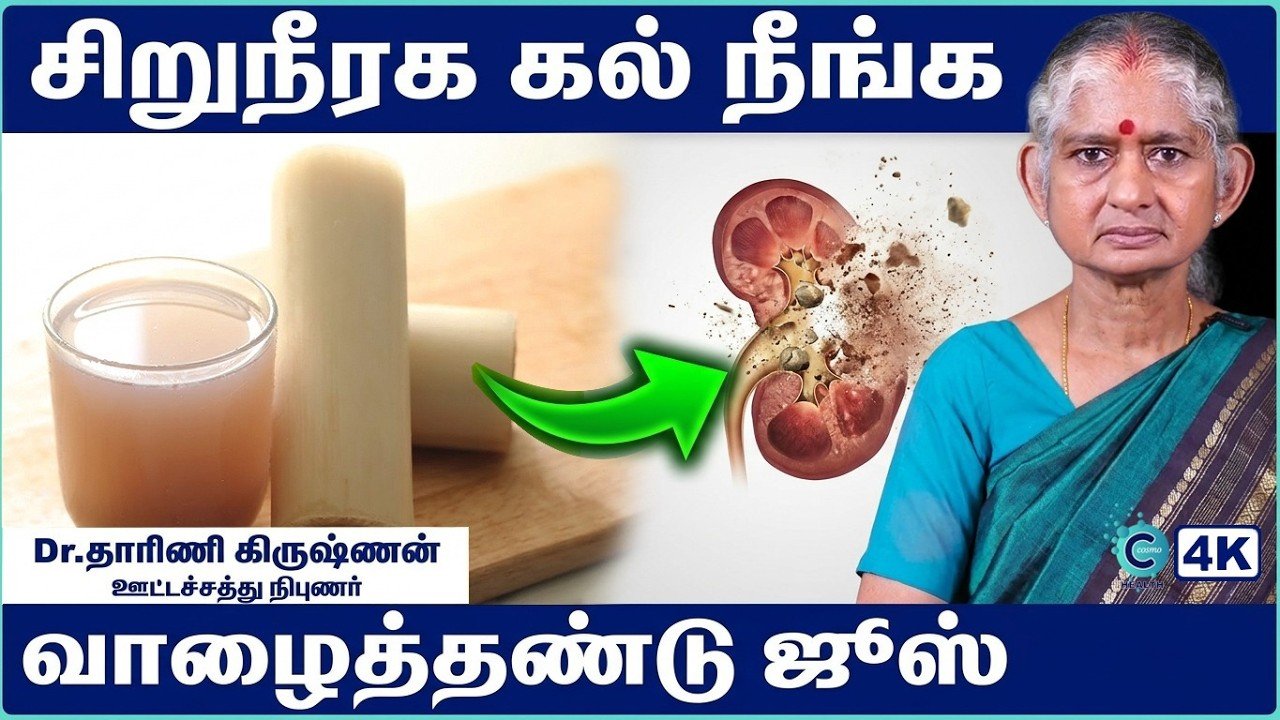
Unlock the mystery of kidney stones: a simple drink, vital hydration, and smart diet choices could be your path to lasting relief!
The sharp, debilitating pain of a kidney stone is a memory no one wants to revisit. It strikes suddenly, often without warning, leaving sufferers desperate for answers and relief. Questions abound: Can traditional remedies truly dissolve these stubborn formations? What dietary changes are essential to prevent their recurrence? And how much water is *really* enough to keep your kidneys clear? At Cosmo Health, we understand these anxieties, and today, we're embarking on an in-depth journey to demystify kidney stones, offering not just solutions, but a comprehensive understanding rooted in both ancient wisdom and modern science.
For generations, a particular remedy has whispered through the annals of traditional medicine: banana stem juice. Is it merely an old wives' tale, or does it hold the key to kidney stone prevention and even dissolution? Our exploration begins here, delving into the powerful potential of this humble plant and unearthing the scientific rationale behind its purported benefits.
Imagine a natural solution, readily available, capable of gently coaxing a kidney stone out of your system. For many, banana stem juice is precisely that. This traditional remedy is revered for its diuretic properties and its believed ability to break down smaller kidney stones, facilitating their smooth passage. But how exactly does one prepare this therapeutic drink, and what makes it so effective?
The secret lies in selecting a tender banana stem. After peeling away the tougher outer layers, carefully slice a two-inch section. As you shave the inner core into small pieces, remember to remove the fibrous strands – these are crucial for a smooth juice. Blend these small pieces thoroughly, and then, using a strainer or cheesecloth, squeeze out the liquid. What you're left with is a quarter-glass of pure, potent banana stem water. For those actively battling small stones, a continuous regimen of this juice for about ten days is often recommended to help flush them out. As a preventative measure, particularly for individuals prone to recurrent stones, incorporating this juice into your diet once or twice a week can significantly reduce the likelihood of new formations.
"A humble banana stem, transformed into a potent elixir, has been a beacon of hope for generations battling the agony of kidney stones, offering a gentle yet effective path to relief."
Beyond traditional remedies, the most fundamental and often overlooked pillar of kidney stone prevention is hydration. Think back to your school science lessons: remember how crystals form in a concentrated solution? Whether it was copper sulfate or another chemical, a saturated liquid, left undisturbed, would eventually yield beautiful, sharp crystals. Your body, in essence, operates on a similar principle. When you consume foods rich in sodium, potassium, oxalates, or other minerals, and then fail to provide enough water to dilute and flush them out, your urine becomes a concentrated solution. This creates the perfect breeding ground for microscopic crystals to form, aggregate, and eventually, grow into painful kidney stones.
It's a common mistake: assuming a glass or two of water a day is sufficient. In reality, your body requires significantly more. During warmer months, aiming for 2 to 2.5 liters is ideal, while in cooler periods, 1.5 to 2 liters should be your minimum. This isn't just a recommendation; it's a non-negotiable requirement for kidney health, unless your doctor has specifically advised you to restrict fluid intake due to other medical conditions.
Once a kidney stone has passed, don't just sigh in relief and forget about it. This is your golden opportunity for targeted prevention! Collecting the stone and submitting it for a lab test is perhaps the most crucial step you can take. Understanding the composition of your stone – whether it's calcium oxalate, calcium phytate, phosphate, or another type – provides invaluable insight. This knowledge empowers you to make precise dietary adjustments, rather than broad, potentially unhelpful, or even harmful, restrictions.
For instance, if your stone is primarily calcium oxalate or phytate, then dietary culprits like certain greens and whole pulses come into focus. However, if your stone is phosphate-based, then restricting dairy (a common source of calcium and phosphorus) might be entirely unnecessary and could even lead to other nutritional deficiencies, especially for vegetarians who rely on pulses and dairy for protein. Without this crucial diagnostic step, you might inadvertently remove essential nutrients from your diet without addressing the root cause of your specific stone formation.
Beyond simply avoiding certain foods, how you prepare them can also make a significant difference. For pulses and legumes, the practice of soaking them overnight and discarding the water is not merely about reducing cooking time; it actively helps to leach out some of the phytates and oxalates. Similarly, cooking greens and then discarding the water might seem wasteful of nutrients, but for individuals with a high risk of kidney stones, it's a trade-off worth considering to reduce their oxalate content.
Balance is paramount. Instead of outright elimination, focus on moderation and variety. If you love greens, diversify your choices. If you rely on pulses for protein, alternate between whole, skin-on varieties and skinned dals like moong dal or toor dal, which typically have lower oxalate and phytate content. The goal is not to deprive your body of essential nutrients but to manage the intake of stone-forming compounds.
While diet and hydration are critical, remember that kidney stone formation can also be influenced by other factors, including genetics and overall lifestyle. Reducing your consumption of outside, often oilier and saltier, foods is a general health recommendation that extends to kidney stone prevention. Embracing a diet rich in fresh fruits and a wide variety of vegetables (beyond the high-oxalate greens) will provide your body with essential vitamins, minerals, and fiber, promoting overall well-being and supporting healthy kidney function.
In conclusion, conquering kidney stones is a journey that combines traditional wisdom, scientific understanding, and conscious lifestyle choices. From the simple, potent banana stem juice to meticulous hydration and a tailored diet guided by diagnostic testing, every step you take brings you closer to a life free from the agony of kidney stones. Listen to your body, understand its needs, and empower yourself with knowledge – for truly, prevention is not just better than cure, it's the ultimate path to lasting health.